The AI Bubble Is Popping in Four Markets at Once
Seventeen days ago, I made a video about Korea’s KOSPI circuit breaker. The thesis was simple: “Positions too crowded, leverage too high, expectations too perfect.” One sentence was enough to explain the crash.
Seventeen days later, the exact same thing happened again.
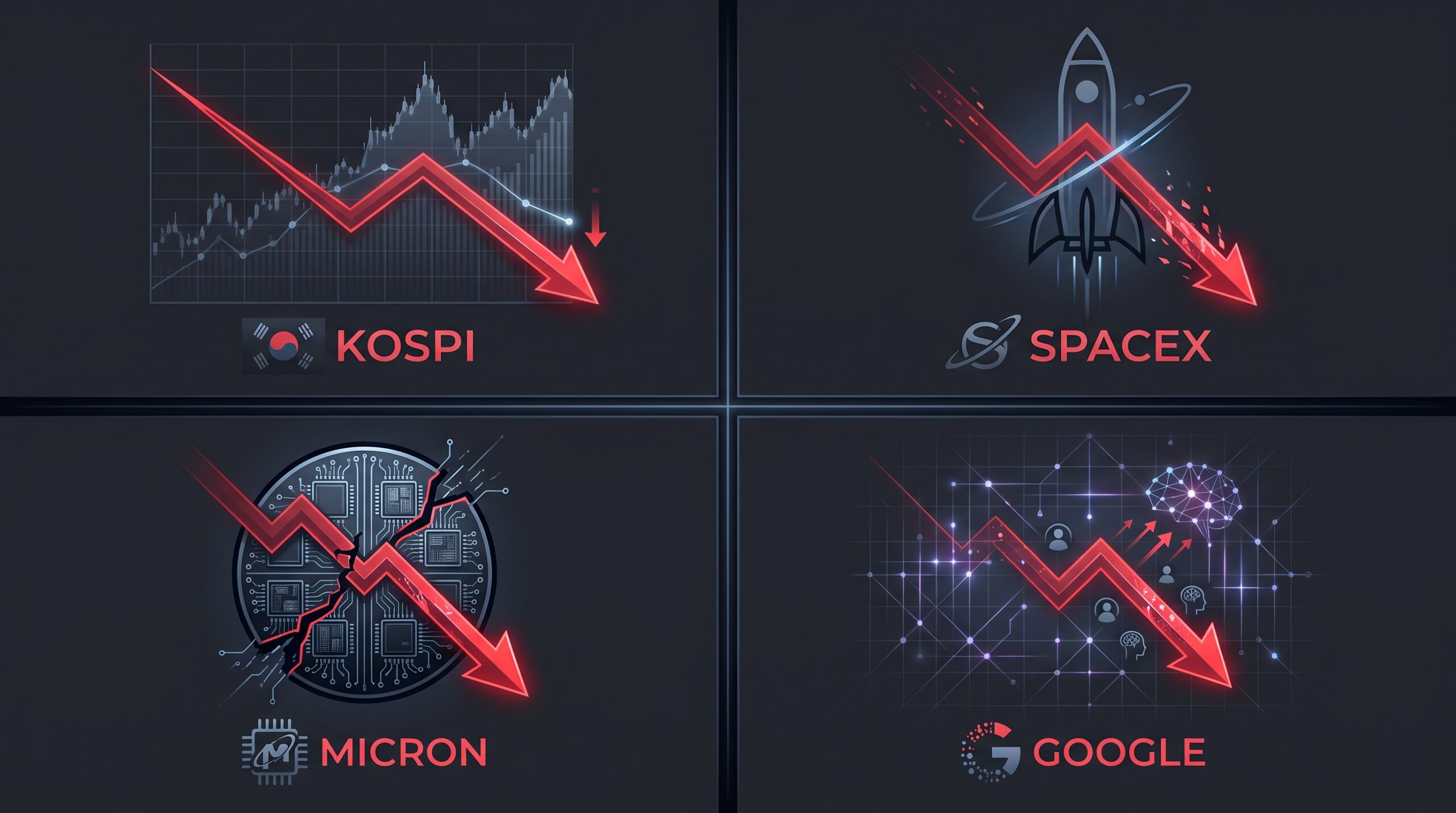
On June 23, 2026, the KOSPI plunged 9.99% — triggering two circuit breakers in a single session. Samsung dropped 12%. SK Hynix dropped 12%. It was the fifth-largest single-day crash in KOSPI history, and the third meltdown in the same month.
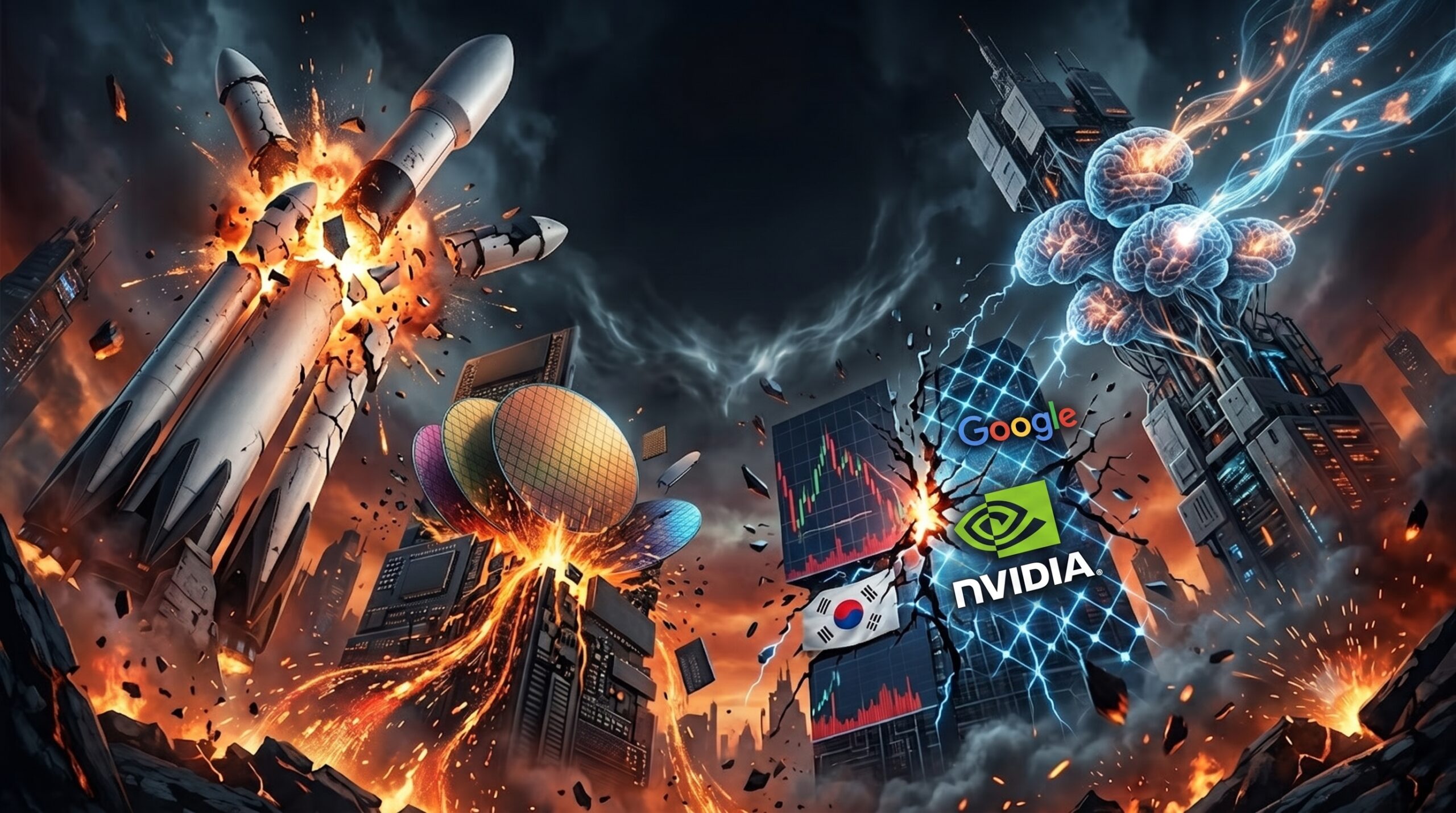
But this time, the story didn’t stay in Korea. It rippled through SpaceX, where shares crashed below their IPO opening price. It hit Micron, which dropped 12% the day before its most anticipated earnings report in years. And it reached Google, where two of the most important AI researchers on the planet walked out the door in 48 hours.
If you’re holding AI stocks and wondering whether this is the ai bubble finally deflating, you’re asking the right question. But the answer isn’t a simple yes or no. What’s happening across these four markets is more specific, more connected, and more instructive than any headline about a “bubble” can capture.
In my experience watching these domino chains play out, the real edge isn’t in predicting whether AI is overvalued. It’s in understanding how the same trade unwinds across different markets — so you see the next one coming before it hits your portfolio.
📋 Table of Contents
Four Markets, One Pattern
Let me walk you through what actually happened, because the connections matter more than the individual headlines.
Korea: The Leverage Spiral
Korea’s retail investors have been running on fumes. Margin loans hit 37.74 trillion won — a record. Twenty-year-olds were canceling their life insurance policies to trade stocks. When the Fed signaled hawkishness last week and Nvidia dropped, Korean semiconductor stocks — the leveraged version of US AI — fell three times as hard.
Then four triggers hit at once: the MSCI excluded Korea from its developed market index again, shutting off passive fund inflows. The Financial Supervisory Service governor publicly admitted leveraged ETFs had been approved “too hastily.” A multi-party forum proposed an unrealized gains tax on stocks and real estate — meaning you’d owe taxes on paper profits even if you never sold a share. And foreign investors sold $3.8 billion in a single day.
Even Korea’s own National Pension Service — the country’s largest institutional investor — had flipped to a net seller this month. Not because they wanted to. Because the KOSPI had run up so fast during the AI rally that their domestic equity allocation breached their policy cap. They were selling not out of conviction, but out of compliance.
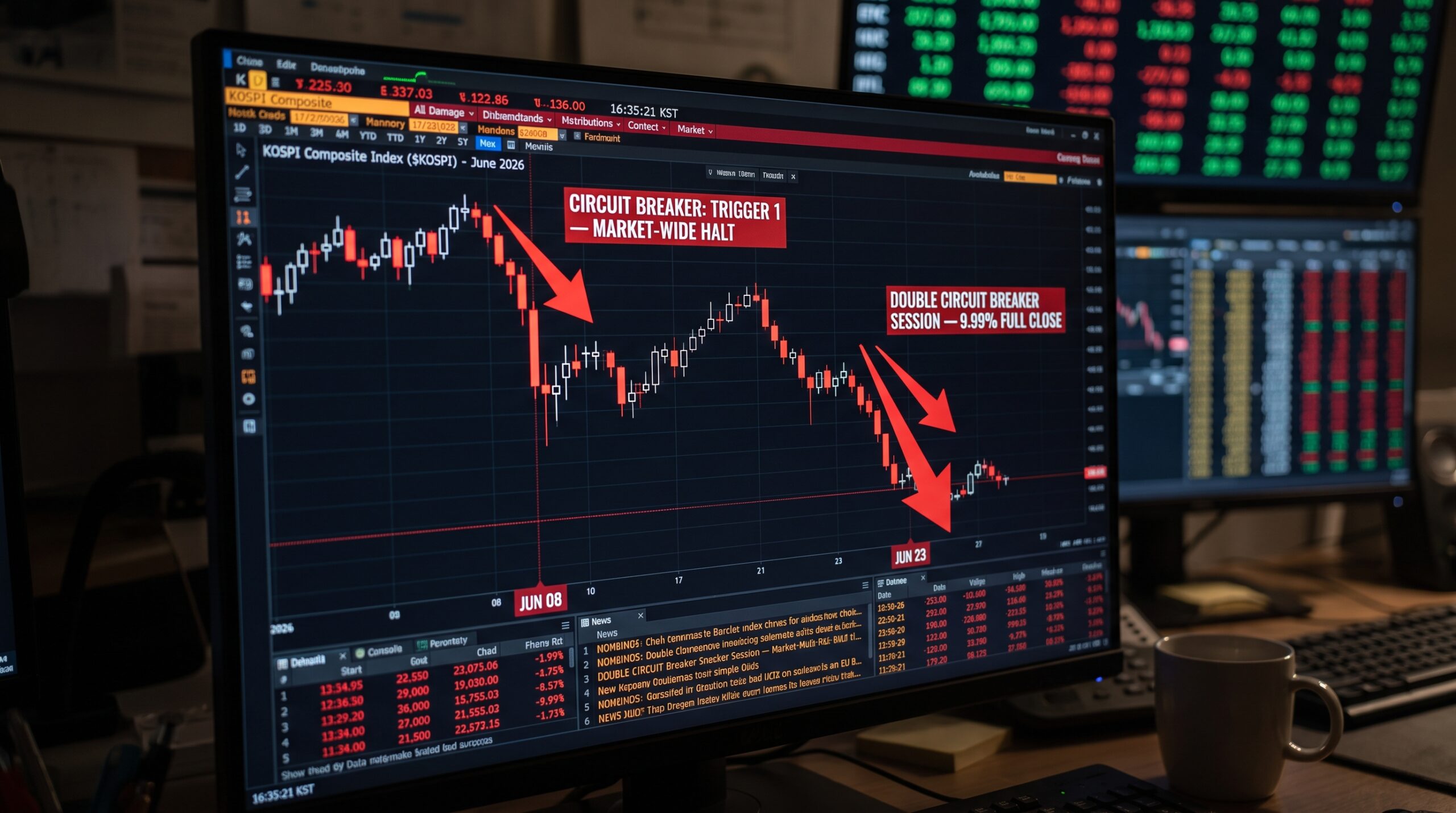
By 2:33 PM, the market-wide circuit breaker froze all trading for 20 minutes. Trading resumed, then another breaker hit. This was the fourth KOSPI circuit breaker of 2026 — there were zero in all of 2025.
Here’s the part that should worry every retail investor: after the first crash on June 8, Korean margin loans didn’t drop. They increased. Retail traders bought a record 11 trillion won during the bounce — the classic gambler’s psychology of losing a hand, winning it back, then doubling the bet.
SpaceX: What’s Inside the Box?
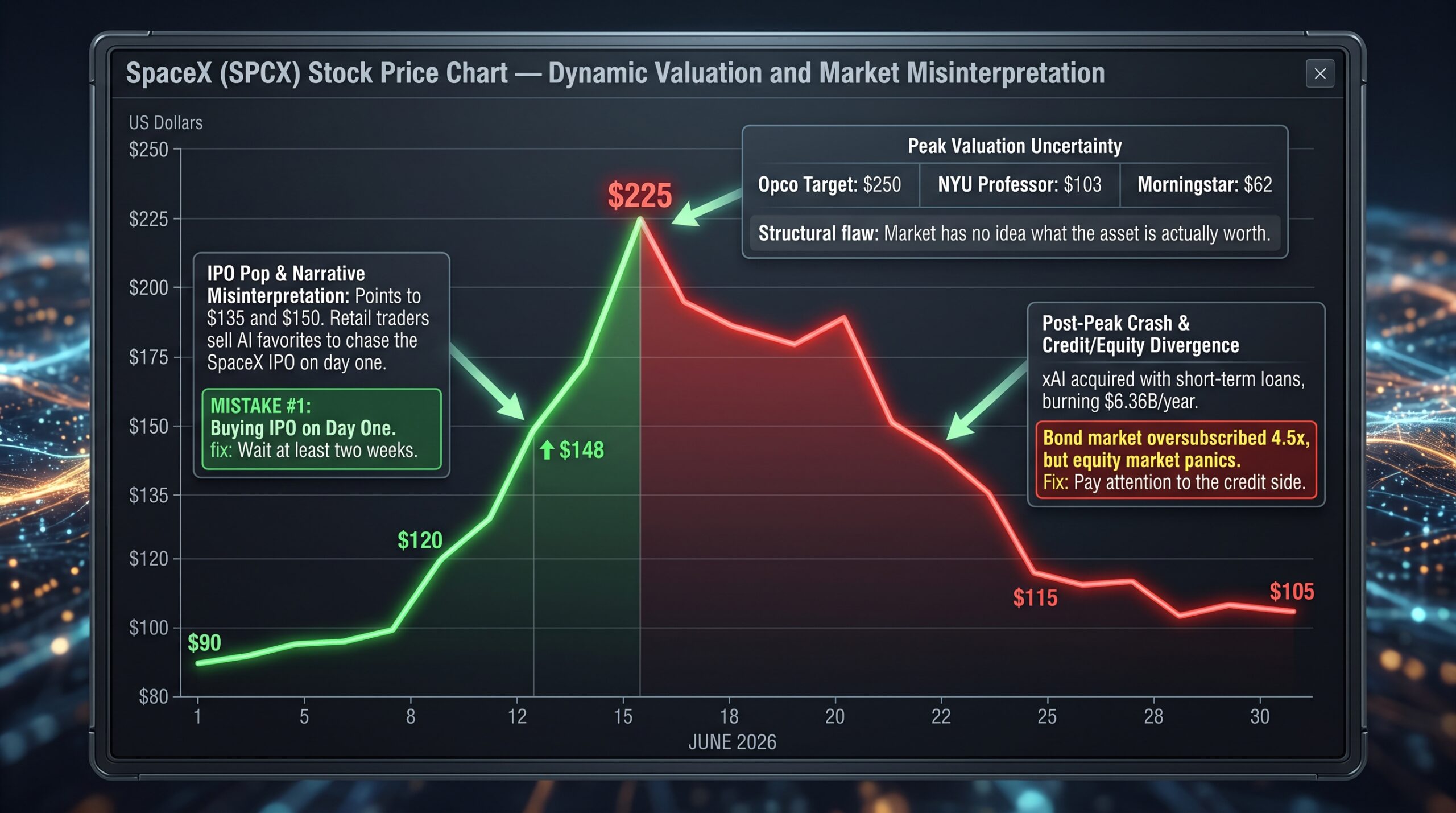
SpaceX IPOd at $135 on June 12, opening at $150, then surging to $225 within three days. At its peak, it was briefly worth more than Microsoft. CNBC reported that retail traders were selling AI favorites to chase the SpaceX IPO.
Then came the bond filing. Ten days after the IPO, SpaceX announced a $20 billion bond offering. Investors were confused: the company had just raised $85 billion in cash from the IPO. Why borrow more?
The answer was buried in the filing: the money was a bridge loan repayment. Earlier this year, SpaceX had acquired xAI — Musk’s AI startup — using short-term loans from a bank syndicate. xAI was burning through approximately $6.36 billion a year in operating losses. Those losses ate all of Starlink’s $4.42 billion profit and then some. The founding team had left before the acquisition. (I covered the full SpaceX IPO timeline in detail here.)
Here’s what I find genuinely instructive about this: stock investors panicked and dumped shares, driving the price below $150 — under the opening-day price. But the bond offering was 4.5x oversubscribed, with $89 billion in orders on a $20 billion deal. The bond market, which is slower, more cautious, and does deeper due diligence, was saying something different than the stock market. When equity and credit markets disagree, I’ve learned to pay attention to the credit side.
The spacex valuation debate also got wild. Oppenheimer set a $250 target. A NYU finance professor pegged fair value around $103. Morningstar’s analyst went with $62. That’s not a normal disagreement — it’s a market that has no idea what the asset is actually worth, which is a volatility warning in itself.
Micron: When “Everything Is Perfect” Meets Reality
Micron was up 260% year-to-date heading into its June 24 earnings. The bull case was airtight: HBM high-bandwidth memory chips are the bottleneck in AI computing, only three companies can produce them at scale, and Micron’s 2026 supply was fully booked with 57 analyst buy ratings backing the trade.
Goldman Sachs calculated a 4.9% DRAM supply gap — the worst in 15 years. This was as close to a structural monopoly as the semiconductor industry gets.
Then earnings hit. Revenue crushed estimates at $41.46 billion. EPS crushed at $25.11. But gross margin came in at roughly 72-73% — below the ~81% consensus. The stock dropped 13%.
This is the cleanest example of a dynamic I’ve seen play out repeatedly: a good company, real demand, genuine competitive moat — but a stock price that had already priced in perfection. When the outcome was merely “very good” instead of “flawless,” the selloff was instant.
Google: Talent Votes With Its Feet
On June 18, Noam Shazeer — one of the eight co-authors of the 2017 “Attention Is All You Need” paper that invented the Transformer architecture behind every modern AI model — announced he was leaving Google for OpenAI. Google had paid $2.7 billion to reacquire him from Character.AI less than two years earlier.
The next day, John Jumper — the DeepMind VP who won the 2024 Nobel Prize in Chemistry for AlphaFold — left for Anthropic.
With these two departures, all eight original Transformer authors have now left Google. The direction of talent flow in 2026 is overwhelmingly Google → Anthropic/OpenAI, not the reverse. DeepMind’s CEO described the current environment as the most intensely competitive talent market in the history of the tech industry. (I previously broke down another AI bubble signal hidden in Alphabet’s finances.)
Google’s business is fine. Q1 profit grew 82%. But the researchers who built the foundations of modern AI are choosing mission focus and productization speed over ad-revenue optimization. I don’t think this means Google is doomed — but I do think it means the center of gravity in AI development has shifted, and talent flow is usually a leading indicator of where value will be created next.
Five Patterns That Help You See the Next One Coming
After watching these four events unfold, here are the patterns I now treat as non-negotiable signals. None of this is theoretical — each one comes directly from what just happened in the markets.
1. Track the transmission chain, not the headline. Korea didn’t crash in isolation. Fed hawkish → Nvidia down → US AI stocks down → Korean semis (the leveraged version) down 3x as much. If you only read the KOSPI headline, you miss that the first domino fell in Washington. When AI stocks move in the US after hours, my honest advice is to check Korean semis the next morning — the reaction there tells you whether the move is real or noise.
2. When stock and bond markets disagree, the bond market is usually right. The SpaceX bond oversubscription while the stock crashed 30% is a textbook signal. Bond investors are boring and conservative and they read the actual prospectus. Equity investors chase narratives. When they diverge sharply, the credit market’s view has historically prevailed over 6-12 month horizons.
3. Always run the “what’s inside the box?” test on every acquisition. SpaceX investors thought they were buying rockets and Starlink. They also bought xAI — a company burning billions with its founding team gone. If you can’t explain what a company actually owns in one sentence, you’re gambling on the ticker, not investing in the business.
4. A regulator admitting a mistake is not an apology — it’s a warning shot. When Korea’s FSS governor said levered ETFs were approved “too hastily,” he wasn’t being reflective. He was signaling that policy tightening was coming. I’ve seen this pattern before: Chinese tech crackdown 2021, crypto exchange bans 2022. When a regulator publicly expresses regret, reduce your leverage immediately. Don’t wait for the actual rule.
5. Follow the talent, not the earnings report. Earnings are a lagging indicator. Talent flow is a leading one. All eight Transformer authors leaving Google tells you more about where AI value will be created in 2028-2030 than any quarterly revenue number. The researchers closest to the technology are voting with their feet. Pay attention to where they’re walking.
The Three Mistakes That Cost Retail Investors the Most
I’ve made versions of every mistake below. I’m not writing from a podium — I’m writing from experience.
Mistake #1: Buying the IPO on Day One
A Blind user posted about FOMO-ing $100K into the SpaceX IPO and being down 30% within days. The post read: “I am literally in tears.” That’s not weakness — it’s what happens when someone bets a meaningful fraction of their net worth on day-one IPO hype.
I learned this the hard way years ago. IPOs are liquidity events for employees and pre-IPO investors who’ve been locked up for years. They will sell into the pop. You’re not participating in a launch — you’re providing exit liquidity. SpaceX’s first lockup expiration begins around July-August 2026, when up to 44% of insider shares could become sellable. That’s when real price discovery starts. Not day one.
The fix: wait at least two weeks after any IPO before even considering an entry. Let the hype settle, let the S-1 details surface, let the lockup timeline become clear.
Mistake #2: The Gambler’s Trap — Adding Leverage After a Recovery
This is the one that has destroyed more retail accounts than any market crash by itself. The market drops. You hold through the pain. The market bounces back and even makes new highs. You feel smart — vindicated. So you increase your position size. You add leverage. Because “you were right.”
Then it crashes again. And this time, your position is bigger, your margin is thinner, and the forced liquidation that follows isn’t a decision you make — it’s one that’s made for you.
Korean retail investors just lived this exact sequence. After the June 8 crash, they didn’t reduce leverage. Margin loans hit a new all-time high. The bounce made them confident. The second crash made them margin-called.
The fix I now treat as non-negotiable: after any drawdown larger than 5%, I review my total exposure before I do anything else. If I survived a crash, the lesson is “use less leverage next time” — never “I should have bet more.”
Mistake #3: Confusing “Good Company” with “Good Stock”
This is the most expensive sentence in investing: “The fundamentals are strong, so the stock must be a buy.”
Google has 82% profit growth, a TPU ecosystem, and massive infrastructure. Micron has HBM supply locked up through 2026. SpaceX has real rockets. These are good companies. Their stocks dropped anyway.
The reason is simple, and I repeat it to myself before every trade now: the price already has 2-3 years of optimistic outcomes baked in. When expectations are perfect, “pretty good” results become a sell signal. The question isn’t whether the company is solid. The question is: what does the current price already assume will happen?
If the answer is “everything has to go right,” you’re not investing. You’re speculating.
FAQ
Is the AI bubble bursting?
Not in a single-popping sound, no. The underlying demand is real — HBM chips are sold out through 2026, Big Tech is spending $660 billion on AI infrastructure this year. But stock prices had priced in 2-3 years of flawless execution. When four different markets correct simultaneously for the same underlying reason — this was a crowded trade unwinding, where overly optimistic positioning met less-than-perfect news — that’s not random. The bubble isn’t in the technology. It’s in the valuations.
What exactly is a margin call?
A margin call happens when your brokerage demands more cash because your leveraged positions have lost too much value. If you can’t deposit more, they liquidate your positions automatically — at whatever price the market will give them. Korea just showed the textbook version: 38.5 trillion won in margin debt, leveraged ETFs down 25% in a day, forced selling triggering more forced selling. The way to avoid it: never use more margin than you could cover in cash if you had to, know exactly what price triggers liquidation at your broker, and set stop-losses well above that level.
Why did SpaceX stock crash right after the IPO?
Three reasons. First, investors discovered the xAI acquisition meant they owned a money-losing AI company inside the rocket company. Second, filing for a $20 billion bond just ten days after raising $85 billion in IPO cash signaled something didn’t add up — it turned out to be bridge loan repayment, not expansion. Third, options trading opened, letting short sellers finally bet against a stock many already thought was overvalued. The takeaway: IPO hype always fades. What’s in the S-1 matters more than what’s in the headline.
Is Google losing the AI race?
The fundamentals are strong, but the signal isn’t in the earnings — it’s in the talent. Losing the Transformer paper co-author and a Nobel laureate in 48 hours, with all eight original Transformer authors now gone, means the direction of research talent is Google → Anthropic/OpenAI, not the reverse. Google can compete on money and compute. The question is whether it can compete on mission focus.
Can governments really tax unrealized stock gains?
Yes, and it’s being actively discussed in multiple countries. Korea’s June 23 forum proposal triggered panic selling even though it’s only a discussion, not a law. The Netherlands passed a 36% tax on unrealized capital gains in early 2026 — then the Finance Minister admitted “something went wrong” under public backlash. Norway’s wealth tax drove 515 high-net-worth individuals to leave the country in just two years (2022-2023). Sweden abolished its wealth tax entirely in 2007 after it drove capital flight. The pattern is consistent: these taxes get proposed, they trigger capital flight, and they usually get modified or abandoned. But the market reacts to the proposal itself — not just to the final law.
Final Thoughts
I don’t think AI is a bubble in the sense that it’s fake or going away. The demand is real. The technology is transformative. But when a trade gets as crowded as AI has become — when Korean twenty-year-olds are canceling insurance policies to chase semiconductor stocks, when SpaceX can triple in three days on no new information, when 57 analysts all rate the same stock a buy — the risk isn’t that the thesis is wrong. The risk is that the price already assumes the thesis is right, and then some.
My honest view: this isn’t the time to be a hero. It’s the time to be disciplined. Have an exit plan written down before you enter any position. Know what the price already expects. Pay attention to the signals most people ignore — bond markets, regulatory language, talent flows.
As the Economic Times recently argued, trading psychology — specifically the ability to recognize and resist FOMO — is now as important as financial analysis. In my experience, that’s exactly right. The edge doesn’t come from knowing more than the next person. It comes from reacting less impulsively.
—
Quick note: A few traders I know run a small Telegram channel where they track market linkages and key signals during high-volatility periods like this one. No calls, no courses — they just share what they’re watching and why, in real time. If that kind of signal interests you, you can find it here.