
Cryptocurrency Beginner Guide: Start from Zero & Buy Your First Bitcoin Safely
A friend called me last week. He had just put $5,000 into a token someone on Telegram told him about. I asked him what the project did. He said, “I don’t know, but the guy said it would 10x.” That’s when I knew I needed to write this. If you’ve been wondering what is cryptocurrency, you’re in the right place — and I’m going to explain it like I wish someone had explained it to me back in 2017, when I made almost every mistake in the book.
3-Minute Quick Overview
- What is cryptocurrency? — A decentralized digital asset maintained by thousands of computers worldwide. No bank or government controls it.
- How to buy Bitcoin as a beginner: Sign up on an exchange → Complete KYC → Deposit fiat → Buy BTC. That’s it.
- The golden rule of crypto safety: Store large amounts in a cold wallet. Never screenshot or cloud-store your seed phrase. Never give it to anyone. Ever.
- The mindset that matters: Only invest what you can afford to lose. Never borrow money to trade crypto.
Table of Contents
- 1. What Is Cryptocurrency? What Is Blockchain? (And What Is Bitcoin?)
- 2. How to Buy Bitcoin as a Beginner — The Complete 4-Step Walkthrough
- 3. How to Choose a Cryptocurrency Wallet & Keep Your Coins Safe
- 4. 6 Mistakes I Made So You Don’t Have To (Crypto Risks Every Beginner Faces)
- 5. FAQ (Frequently Asked Questions)
What Is Cryptocurrency? What Is Blockchain? (And What Is Bitcoin?)
What Is Blockchain?
One-sentence answer: What is blockchain? It is a public ledger maintained simultaneously by thousands of computers around the world — no single person or entity controls it, and once something is recorded, it can never be altered.
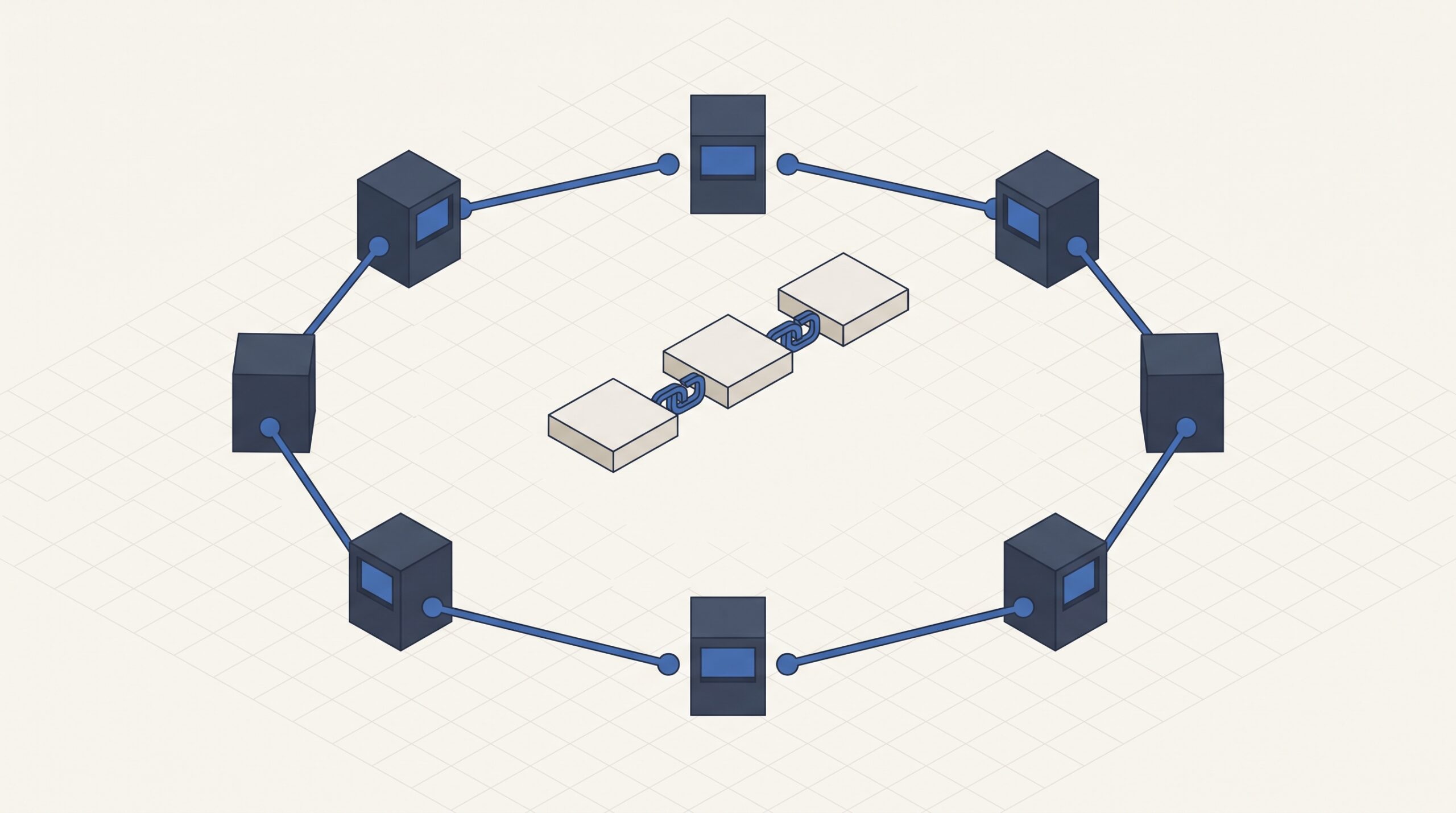
Forget the tech for a moment. Imagine a small village where every transaction between residents gets written into a single public record book. But here is the twist — this book is not held by one person. Every household has an identical copy. When someone wants to send money to someone else, the whole village verifies the transaction together — checking that the sender actually has the funds. Once verified and written down, the entry can never be erased or changed.
That is blockchain. I remember the moment this clicked for me — I was staring at a block explorer for the first time, watching transactions confirm in real time, and suddenly the whole thing stopped feeling like magic and started feeling like math. Cryptocurrency is simply digital money that runs on this kind of public, decentralized ledger.
What Is Bitcoin?
One-sentence answer: Bitcoin is a decentralized digital currency with a hard cap of 21 million coins, created for peer-to-peer transfers that do not need a middleman.
In 2008, an anonymous person (or group) named Satoshi Nakamoto published the Bitcoin whitepaper: “Bitcoin: A Peer-to-Peer Electronic Cash System.” Before Bitcoin, every digital payment had to go through a middleman — a bank, PayPal, Visa. These systems work, but they come with problems:
- You have to trust the middleman not to freeze your account or misuse your data.
- Cross-border transfers are painfully slow and expensive — days of waiting, tens of dollars in fees.
- Central banks can print more money whenever they want, silently eroding the value of what you hold.
Bitcoin fixes all three. Its supply is mathematically capped at 21 million. No central authority can inflate it. And you can send it to anyone, anywhere, in minutes — without asking anyone permission.
Where Does Cryptocurrency Get Its Value?
This is the question I hear most from people new to cryptocurrency beginner topics: “It is not a physical thing — why is it worth anything?”
Scarcity. Bitcoin 21 million cap is enforced by code, not by a promise. Think of it as digital gold — the supply is finite and entirely predictable, unlike fiat currencies that central banks can print at will.
Decentralization and censorship resistance. No government, bank, or corporation can freeze your Bitcoin or block your transaction. If you live somewhere with an unstable banking system or strict capital controls, this matters enormously.
Network effects. As of 2025, over 741 million people worldwide own cryptocurrency, according to Crypto.com latest market sizing report — up 12.4% from the year before. Bitcoin alone has hundreds of millions of holders. In March 2024, Bitcoin market cap briefly surpassed silver at over $1.4 trillion. That is not niche anymore.
Utility. Beyond Bitcoin, networks like Ethereum support smart contracts, powering decentralized finance (DeFi), NFTs, and applications that give crypto real-world use cases beyond just holding.
What Is a Spot Bitcoin ETF? Why Are Institutions Buying?
One-sentence answer: A spot Bitcoin ETF lets you get Bitcoin exposure through a normal stock brokerage account — the same way you would buy Apple or Tesla shares.
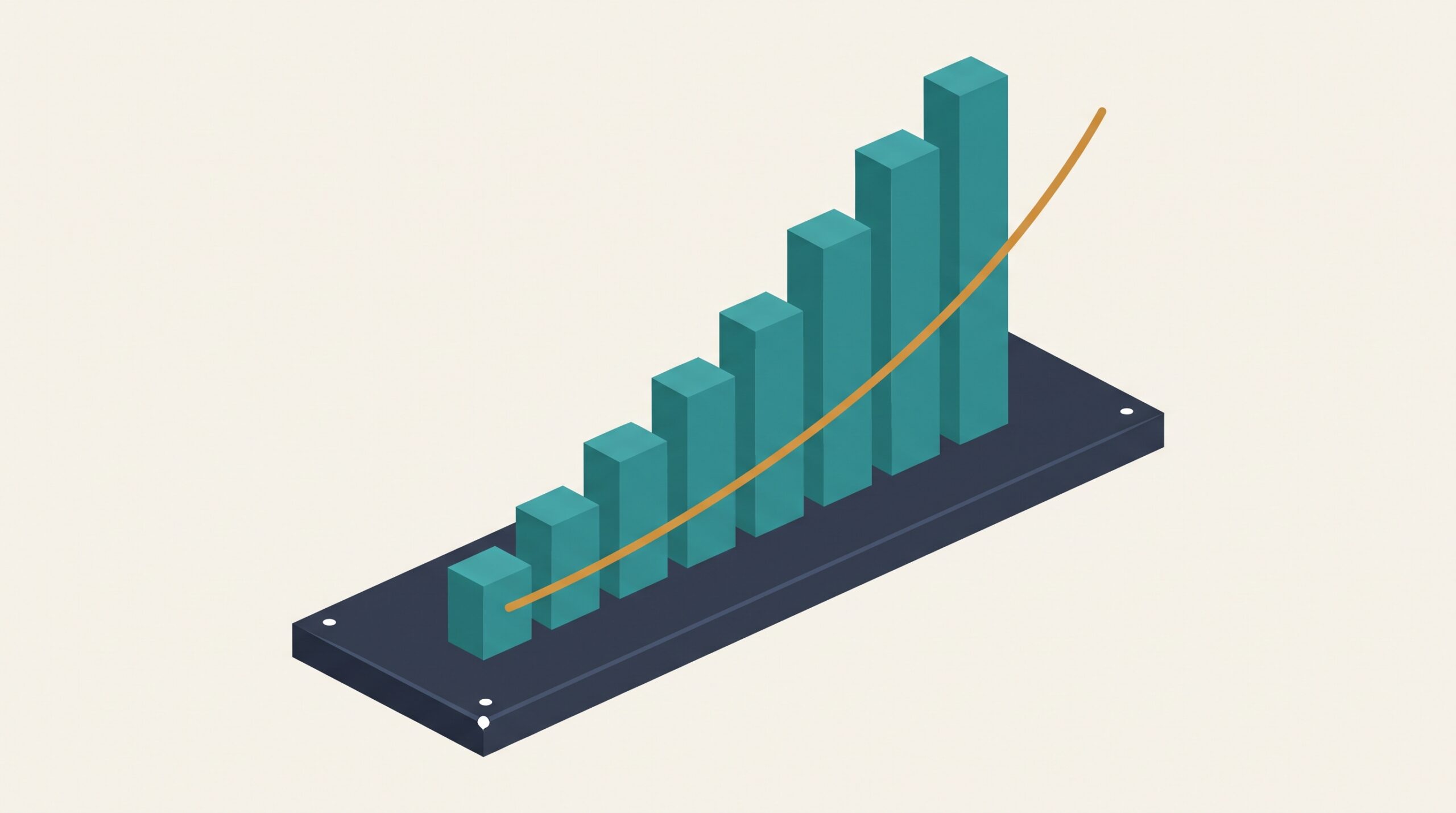
When BlackRock launched its iShares Bitcoin Trust (IBIT) in early 2024, it became one of the fastest-growing ETFs in history. For institutions like pension funds and insurance companies that could not directly hold crypto, ETFs opened a compliant, regulated door. Since approval, cumulative net inflows tracked by Farside Investors have reached tens of billions of dollars.
The signal is clear: crypto is being absorbed into the mainstream financial system. This is not about speculation anymore — it is about asset allocation.
ETH vs BTC: Which Is Better?
One-sentence answer: Bitcoin is digital gold — a store of value. Ethereum is digital oil — fuel for a decentralized application ecosystem. They are different bets, and you can hold both.
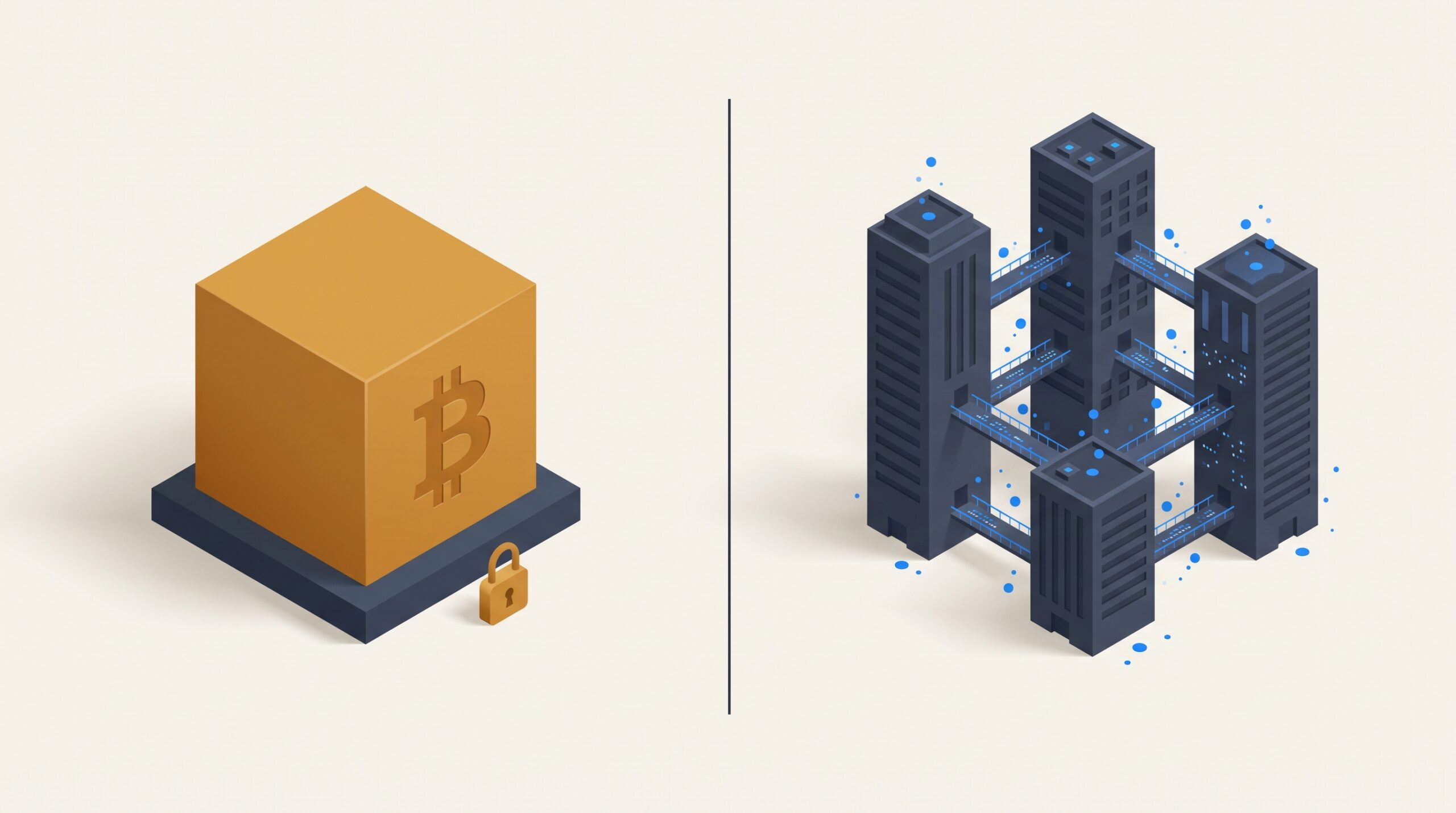
If you are wondering how to buy BTC versus how to buy ETH, the buying process is identical. But they represent fundamentally different investments:
- Bitcoin (BTC): Scarcity. Security. Decentralization. Its primary use case is storing value outside the traditional financial system. When you buy BTC, you are betting on the future of decentralized money.
- Ethereum (ETH): Programmability. Ecosystem. Its value depends on how many developers build on it, how many dApps run on it, and how much economic activity flows through it. Being familiar with how to buy ETH means understanding it is a bet on the future of Web3.
For beginners: start with Bitcoin. Understand it first. Then explore Ethereum. They are not either/or — plenty of investors hold both.
Main Categories of Cryptocurrency
| Category | Examples | Core Purpose |
|---|---|---|
| Digital Gold | Bitcoin (BTC) | Store of value, inflation hedge |
| Smart Contract Platforms | Ethereum (ETH), Solana (SOL) | Run decentralized applications |
| Stablecoins | USDT, USDC | Pegged 1:1 to USD, for trading and hedging |
| Cross-Chain Protocols | Polkadot (DOT), Cosmos (ATOM) | Connect different blockchains |
| DeFi | Uniswap (UNI), Aave (AAVE) | Decentralized lending, borrowing, trading |
Beginner Tip: Start with Bitcoin and stablecoins. Do not chase random altcoins. In 2021, I bought half a dozen coins I had never heard of because I was scared of missing out. Several of them have gone to zero. Learn from my mistake.
How to Buy Bitcoin as a Beginner — The Complete 4-Step Walkthrough
Now for the practical part. If you have been searching how to buy Bitcoin, how to buy BTC, or how to purchase Bitcoin, this section is for you. Remember: the goal of your first purchase is not to make money. It is to learn the process with an amount so small you will not care if it drops.
Step 1: Choose a Regulated Exchange
One-sentence answer: Pick a platform that holds major financial licenses — think of it like choosing a bank, not a casino.
An exchange is your gateway into crypto. When comparing options, focus on four things:
- Regulation and licensing — Does it hold licenses in the US, EU, or other reputable jurisdictions?
- Security track record — Has it been breached? If so, how did it handle it? Were users compensated?
- Liquidity and volume — High volume means your orders fill quickly without big price slippage.
- User reputation — Check Reddit, X, and real user reviews about withdrawal experiences and customer support.
Important: Supported exchanges vary by region. Pick one compliant with your local laws, and always use the official link to sign up — search result ads are full of phishing traps.
Coinbase vs Binance: How to Choose?
One-sentence answer: Beginners who want safety and simplicity → Coinbase. Those willing to learn and seeking lower fees → Binance.
Is Coinbase safe? From a platform perspective, Coinbase is one of the safest exchanges out there — Nasdaq-listed, heavily regulated by the SEC. However, in May 2025, Coinbase disclosed an insider breach: bribed customer support agents leaked KYC data belonging to roughly 70,000 users. No crypto was stolen from Coinbase systems directly, but the exposed data was used for targeted phishing attacks that did result in user losses. Is Coinbase still safe? Yes — but platform security does not automatically protect your individual account. Use a strong unique password. Enable 2FA. Never click links from emails claiming to be Coinbase.
| Coinbase | Binance | |
|---|---|---|
| Trust & Compliance | US-listed, SEC-regulated, industry standard | Global operations, evolving compliance across jurisdictions |
| User Experience | Extremely simple, built for beginners | Feature-rich but complex, multiple trading modes |
| Asset Selection | Fewer coins, stricter listing standards (lower scam risk) | Massive selection, plus staking, earn, full ecosystem |
| Fees | Higher — especially in Simple mode | Low across the board |
Beginner Recommendations:
— Safety-first, in North America → Coinbase
— Learning-oriented, want more coins and lower fees → Binance
What Are Coinbase Fees? How to Save
One-sentence answer: Switch to Coinbase Advanced Trade and your fees drop from 3-5% to 0.4-0.6%. Same app, free toggle.
Coinbase has two interfaces, and the fee difference is massive:
- Coinbase Simple Mode: Spread + fixed fee. On a $100 purchase, fees can hit 3-5%. You get roughly $96 worth of Bitcoin.
- Coinbase Advanced Trade: Maker/Taker model, around 0.4-0.6%. That same $100 trade costs less than $0.60 in fees.
- Deposit method matters too: Bank transfers (ACH) are usually free. Credit/debit cards add 3-5% on top of everything else.
Cost-Saving Tip: Go into your Coinbase settings and switch the trading interface to Advanced Trade. It is the same app, no extra download. This one toggle saves you 80%+ on every trade. I traded for over a year before I figured this out — do not repeat my mistake.
Step 2: Complete Identity Verification (KYC)
One-sentence answer: KYC is legally required — like opening a bank account — and takes about 10-15 minutes.
You will need:
- Personal info: Full name, date of birth, address.
- ID document: Government-issued — passport or driver license.
- Biometric check: Usually a quick selfie or short video scan.
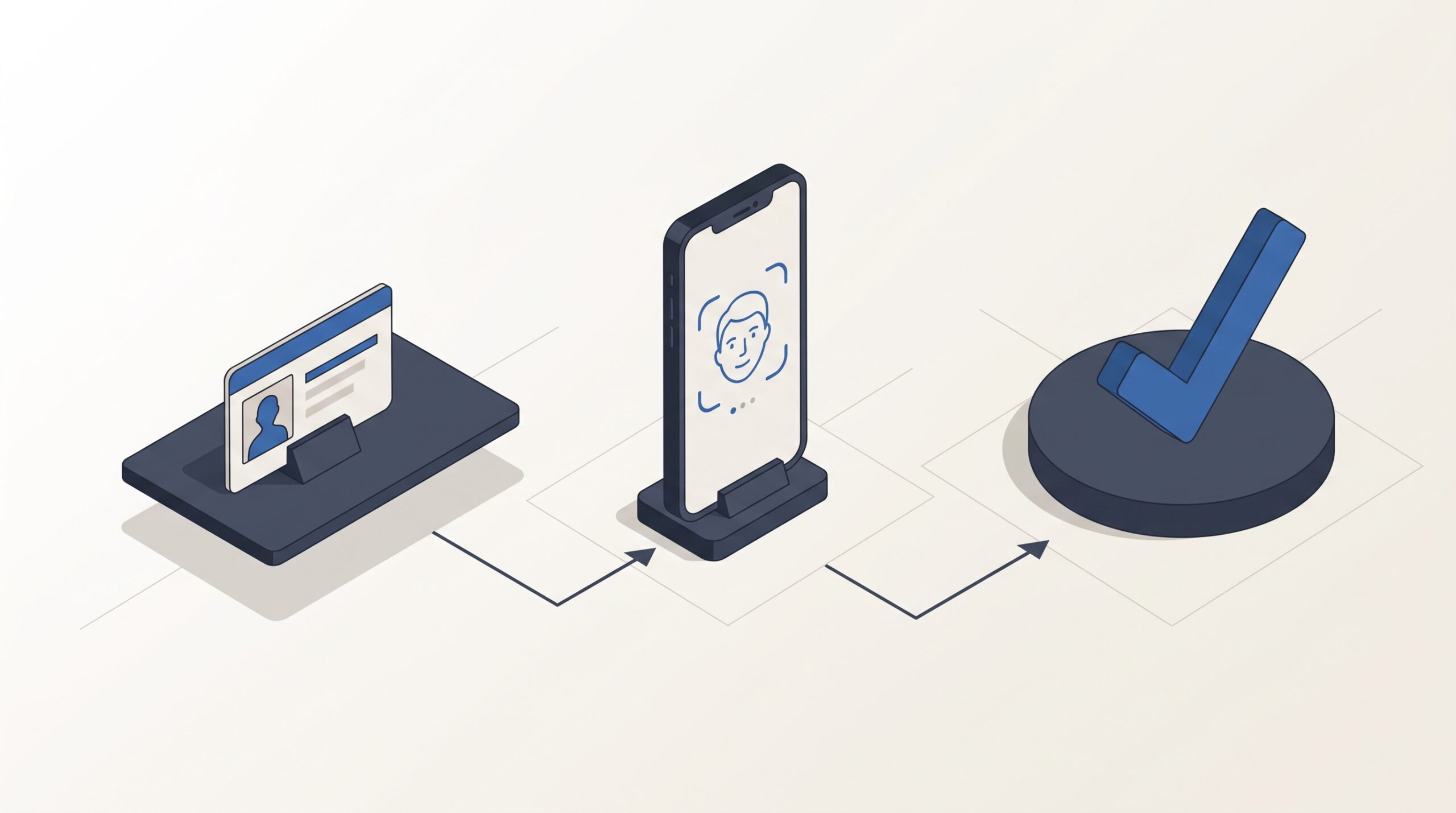
Most people finish in 10-15 minutes. Verification takes anywhere from minutes to a couple of days. When I first did KYC on Coinbase in 2017, I got rejected twice because my ID photo was too blurry — take the photo in good lighting and save yourself the frustration.
Step 3: Deposit Fiat Currency
Once verified, fund your account:
- Bank transfer (wire or ACH): Lowest fees, best for larger amounts. Processing: a few hours to 1-2 business days.
- Credit/debit card: Instant, convenient, but expensive — typically 3-5% in added fees.
- Third-party payment: Some exchanges support PayPal or Apple Pay — depends on your region.
Step 4: Execute Your First Purchase
One-sentence answer: Get a small amount, use a market order, and treat it as a learning exercise — not a profit play.
The typical flow: Your Bank → Deposit Fiat → Exchange → Buy Stablecoins (USDC/USDT) → Buy BTC → For long-term holding, transfer out to a cold wallet.
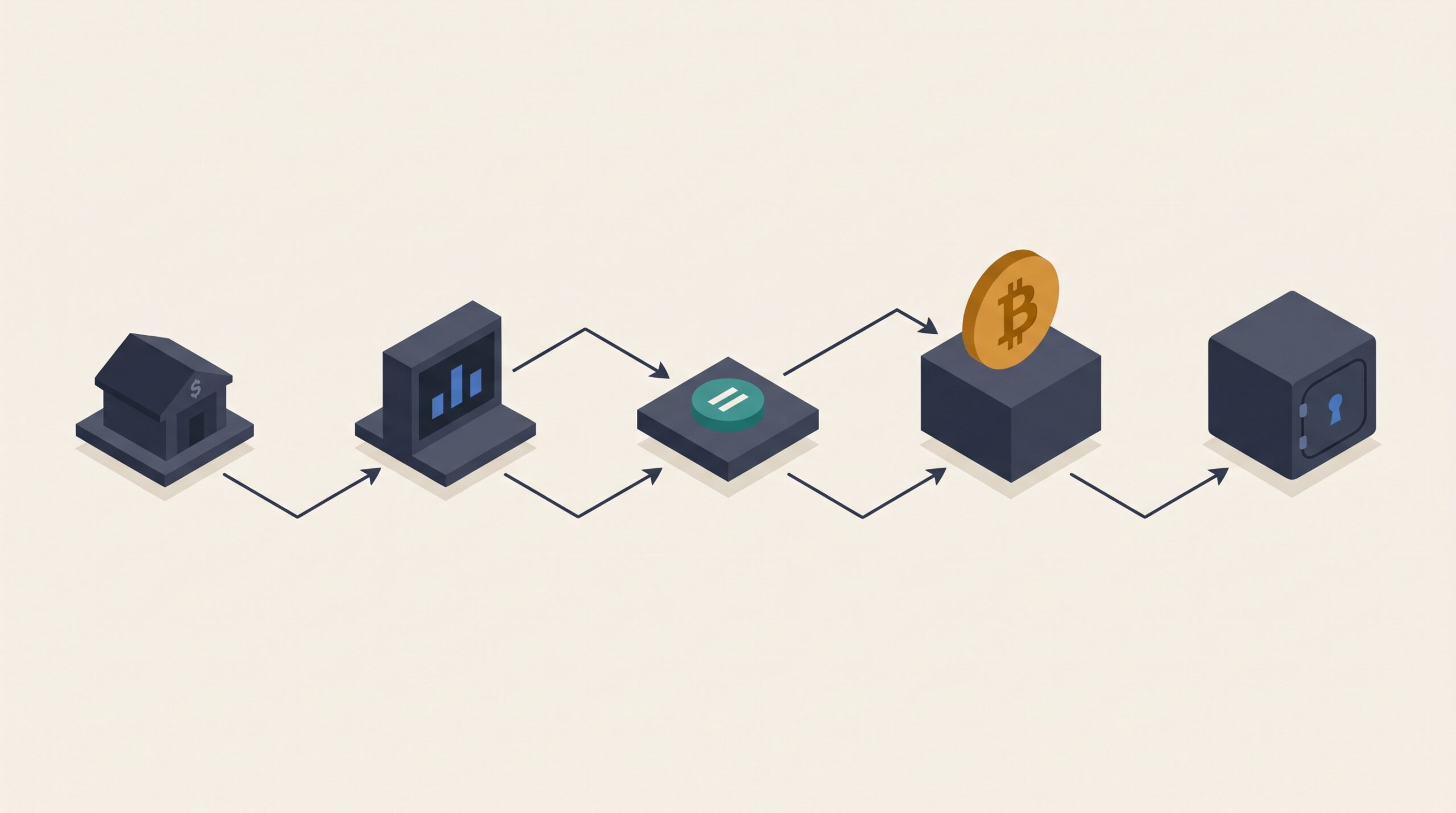
- Go to the exchange “Trade” or “Buy” page.
- Select your trading pair (e.g., BTC/USDC).
- Choose a Market Order — buys instantly at the current price. Beginners should not use limit orders yet.
- Enter your amount.
- Click “Buy.” Bitcoin appears in your account.
Lesson from the trenches: During my first purchase in 2017, I refreshed the price every 30 seconds and my hands were shaking before I clicked confirm. I later realized the solution: use an amount so small you genuinely do not care if it drops 50% tomorrow. For most beginners, $50-100 is perfect. The hands-on experience is worth more than the dollar amount.
How Much Should I Buy? When Is the Best Time?
First purchase: Start with $50-100. The goal is to go through the full process — deposit, trade, feel the volatility, maybe even try withdrawing to a personal wallet.
Timing: Stop trying to call the top or bottom — you cannot. Instead, set up a Dollar-Cost Averaging (DCA) plan: invest a fixed amount every week or month. When the market is down, your fixed amount buys more. When it is up, you maintain discipline and avoid FOMO-driven decisions.
How to Choose a Cryptocurrency Wallet & Keep Your Coins Safe
There is a saying in crypto: “Not your keys, not your coins.” When FTX collapsed in 2022, the people who kept their Bitcoin on the exchange lost it. The people who had it in their own cryptocurrency wallet kept it. That is the difference between exchange custody and self-custody.
Public Key, Private Key, Seed Phrase — What Are These?
Understanding these three concepts is the foundation of wallet security. I have explained this to dozens of beginners and this analogy always lands:
- Public Key (Address): Like your bank account number. Share it freely to receive funds.
- What is a private key? Like your ATM PIN. Whoever holds the private key controls the assets. Never share it. Never screenshot it. Never store it in the cloud.
- What is a seed phrase? (Recovery phrase): A set of 12 or 24 English words your wallet generates as a backup. Your seed phrase IS your private key in readable form. Anyone who has it owns everything in your wallet.
Remember: No legitimate exchange, wallet, or support team will ever ask for your seed phrase. Anyone who does is 100% trying to steal from you.
Hot Wallet vs Cold Wallet
One-sentence answer: Hot wallets are online and convenient (keep small amounts). Cold wallets are offline and extremely secure (keep large amounts).
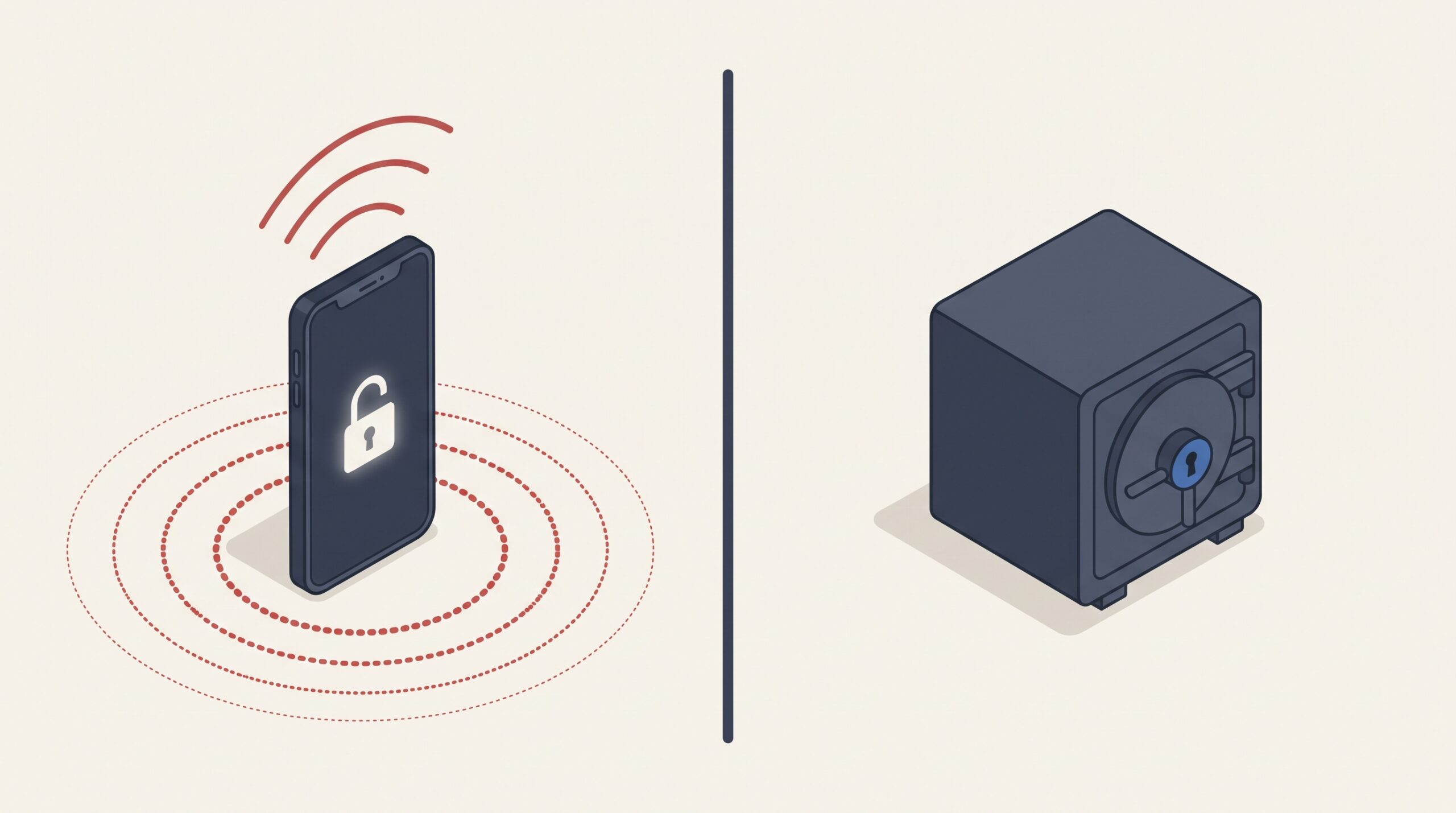
Hot Wallets — Connected to the internet: exchange accounts, MetaMask, Trust Wallet. Convenient for trading and daily use, but vulnerable because they are online. Best for: small amounts, active trading, daily use.
Cold Wallets — Physical devices that store private keys offline: Ledger, Trezor. Private keys never touch an internet-connected device, so the risk of remote theft drops near zero. They cost $50-150+ and take a bit more setup. Best for: larger amounts, long-term holdings.
My practical rule of thumb: Under $1,000 → exchange custody is fine. $1,000-$5,000 → at minimum, use a hot wallet you control. Over $5,000 → hardware cold wallet is not optional, it is mandatory. This framework came from my own experience — I left too much on exchanges for too long, and the FTX collapse in 2022 was the wake-up call that changed my habits permanently.
Cold Wallet Recommendation: Ledger vs Trezor
One-sentence answer: Both are secure enough for most investors — Ledger is more user-friendly, Trezor is more open-source and transparent.
What typical Ledger tutorial content will not tell you: Ledger has experienced multiple customer data leaks — in July 2020 (272K records), December 2020 (292K via Shopify), and most recently January 2026 (via payment partner Global-e). In each case, wallet security itself was never compromised — private keys and seed phrases remained safe — but leaked personal data (names, addresses, emails, order history) made Ledger users prime targets for highly convincing phishing attacks. This context matters when making a cold wallet recommendation.
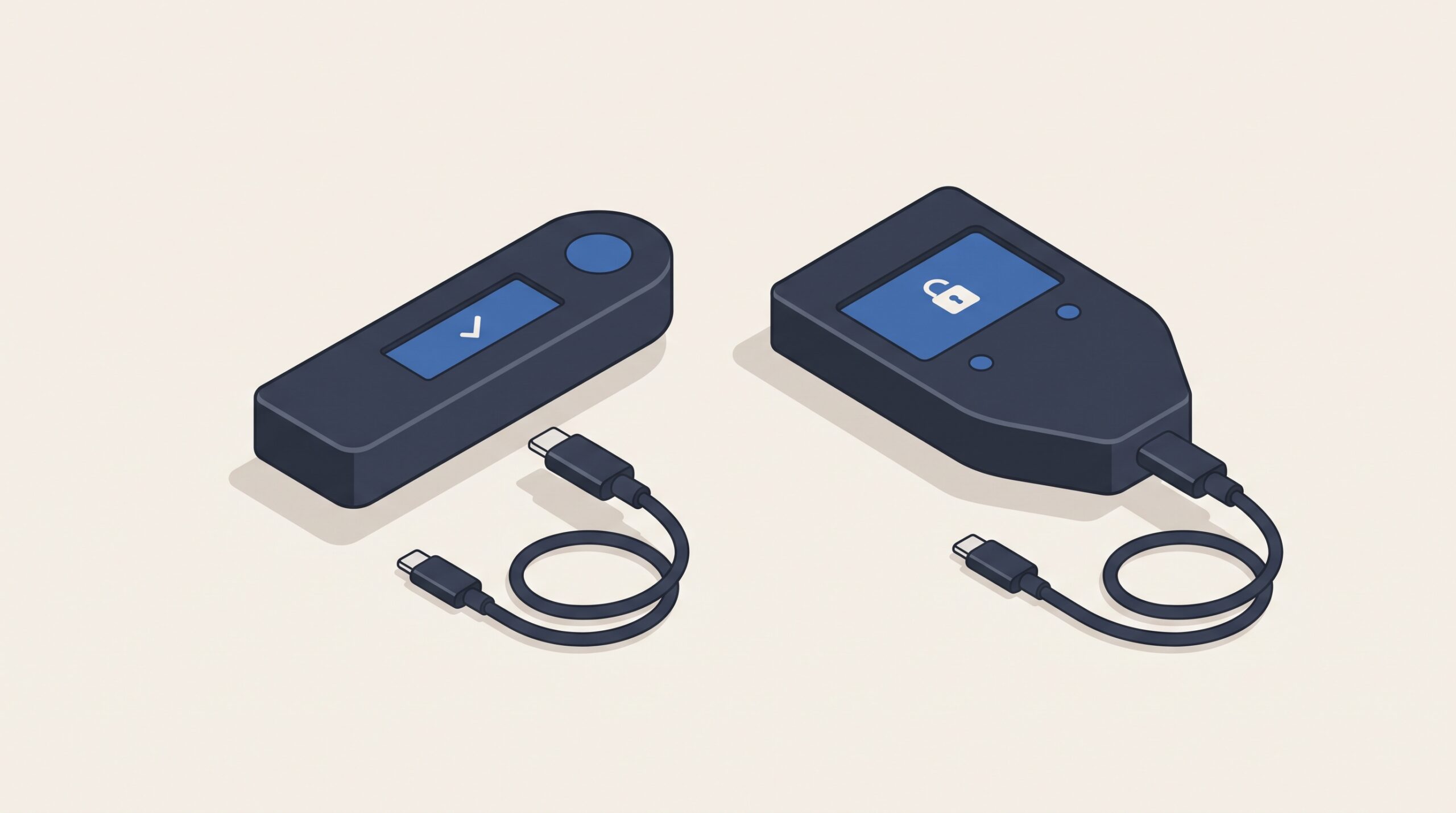
| Ledger | Trezor | |
|---|---|---|
| Security Chip | Proprietary secure element (SE) — strong physical tamper resistance | Open-source, standard chips — security more software-based |
| Open Source | Partially closed-source — some community criticism | Fully open-source — auditable code, high community trust |
| User Experience | Ledger Live software is polished, beginner-friendly. Ledger tutorials widely available | Trezor Suite is also intuitive with straightforward setup |
| Price | ~$79-$149 (Nano S Plus to Stax) | ~$59-$179 (Model One to Safe 5) |
Bottom line: If you value convenience and a dedicated security chip, choose Ledger. If you value full open-source transparency and community trust, choose Trezor. Both will keep your Bitcoin safe.
USDT vs USDC: What is the Difference? Which Is Safer?
One-sentence answer: USDC is more transparent and has stricter audits. USDT has better liquidity and more trading pairs. I personally use USDC for stable reserves.
Let us start with what is a stablecoin: it is a cryptocurrency designed to stay pegged at $1 USD. Think of it as a “parking spot” — when you want to exit a volatile position without cashing out to your bank, you swap into a stablecoin. In 2022 during the Terra/LUNA collapse, I had about $3,000 parked in USDT. For about six hours, my balance showed $2,850 — the peg was wobbling under panic selling. It eventually recovered, but I moved everything to USDC afterward and never looked back.
Is USDT safe? USDT (Tether) has survived multiple de-pegging scares without permanently breaking its dollar peg. But its reserve composition has been historically opaque, and Tether has faced regulatory fines over it. The USDC and USDT difference comes down to transparency: USDC (issued by Circle, co-founded with Coinbase) holds reserves with custodians like BlackRock and undergoes monthly audits by top-tier accounting firms. It is widely considered the safer, more transparent option.
| USDT (Tether) | USDC (USD Coin) | |
|---|---|---|
| Issuer | Tether Limited | Circle (co-founded with Coinbase) |
| Transparency | History of opacity and fines over reserve composition | Monthly audits, BlackRock-custodied reserves, high transparency |
| Liquidity | Largest market cap, widest trading pair selection | Considered the most compliant stablecoin |
Bottom line: If you prioritize safety and transparency, USDC is the better choice. If you need maximum liquidity and trading flexibility, USDT has the edge. Regardless, do not leave large sums idle in any single stablecoin for long periods.
Seed Phrase Security — These Rules Will Save Your Assets
When it comes to how to store Bitcoin, the entire game comes down to one thing: protecting your seed phrase. The vast majority of stolen crypto is not from sophisticated hacks — it is from users voluntarily giving away their credentials.
- Write it on paper (or metal). Store it somewhere physically secure. Never screenshot it. Never take a photo. Never save it in a notes app, Google Docs, or email.
- Never type your seed phrase into any website or app unless you are actively restoring your own wallet on a trusted offline device.
- Never give your seed phrase to anyone claiming to be customer support, a project admin, or a community moderator.
I have watched this happen: A friend googled “MetaMask support,” clicked the first ad, entered his seed phrase on a fake site, and lost over $8,000 in under 20 minutes. He sat there in silence for five full minutes. Do not let this be you.
6 Mistakes I Made So You Do Not Have To
This chapter is the most valuable section of this guide. Cryptocurrency risks are not just about price swings — the real damage usually comes from your own behavior, not the market. Every mistake below is something I either did myself or watched a friend do in real time.
Mistake 1: Buying High and Selling Low (FOMO + Panic)
The scenario: Bitcoin pumps 30%. You FOMO in. Three days later, it drops 20%. You panic-sell. Hours later, it rebounds. You buy back in higher. Repeat until your portfolio is a fraction of what you started with.
My story: In late 2017, I bought Bitcoin near $19,000 — essentially the cycle top. Over the next year, I watched it slide below $3,500. I did not sell — not because I was disciplined, but because I barely knew how. That accidental HODL saved me. Later, I adopted DCA (dollar-cost averaging) and never tried to time a top or bottom again.
Lesson: You will never buy the absolute bottom or sell the absolute top. Stop trying. DCA takes emotion out of the equation. Mentally prepare for a 3-5 year horizon before you enter your first trade.
Mistake 2: Using High Leverage
The scenario: You see traders posting 10x gains in a day. You open a 50x leveraged long. The market moves 2% against you. Your entire position gets liquidated in seconds.
My story: In the 2021 bull run, I put $500 into a futures account, won three trades in a row, and thought I was a genius. On the fourth trade, I opened a 20x long. Direction was right, but my entry was off by half a percent — one wick liquidated me. The transition from “I am amazing at this” to “I am an idiot” took exactly one candle.
Lesson: For your first year in crypto, do not touch leverage trading. Not once. When you are eventually ready, never risk more than 5-10% of your capital and keep leverage under 3x. Leverage amplifies losses exactly as much as it amplifies gains.
Mistake 3: Blindly Following Signal Groups
The scenario: A guru posts impressive profit screenshots. You join their Telegram, get told to buy a micro-cap 100x gem. The coin goes to zero. The group goes silent. The guru vanishes.
My story: In 2021, I followed a Twitter analyst whose chart breakdowns looked incredibly precise. Every call seemed to play out perfectly in hindsight. It took me months to realize their business model was not trading — it was collecting membership fees and front-running their own calls. They would buy before the post, then sell into the crowd they just hyped. Real traders who consistently make money do not need to sell courses or signal subscriptions.
Lesson: Anyone claiming they can consistently predict short-term price movements is either lying to you or lying to themselves. Before every buy, ask yourself: if this goes to zero, can I handle it?
Mistake 4: Phishing Links and Malicious Contract Approvals
The scenario: You get a text or email from your exchange about suspicious activity. You click the link, enter your login and 2FA. Within seconds, your funds are drained. Or: you click Connect Wallet and Approve on a random website — your tokens are automatically transferred out.
Lesson:
- Always log in from the official exchange URL — type it yourself. Never click links in emails or DMs.
- Enable 2FA using Google Authenticator or a hardware key. Avoid SMS 2FA if possible — SIM swaps are real.
- Never connect your wallet or click Approve on any site you cannot verify 100%.
- Regularly check and revoke unnecessary token approvals using tools like Revoke.cash.
Mistake 5: Buying Scam Coins / Shitcoins
One-sentence answer: Stick to top 20-50 coins, verify contract addresses yourself, and never chase insider info.
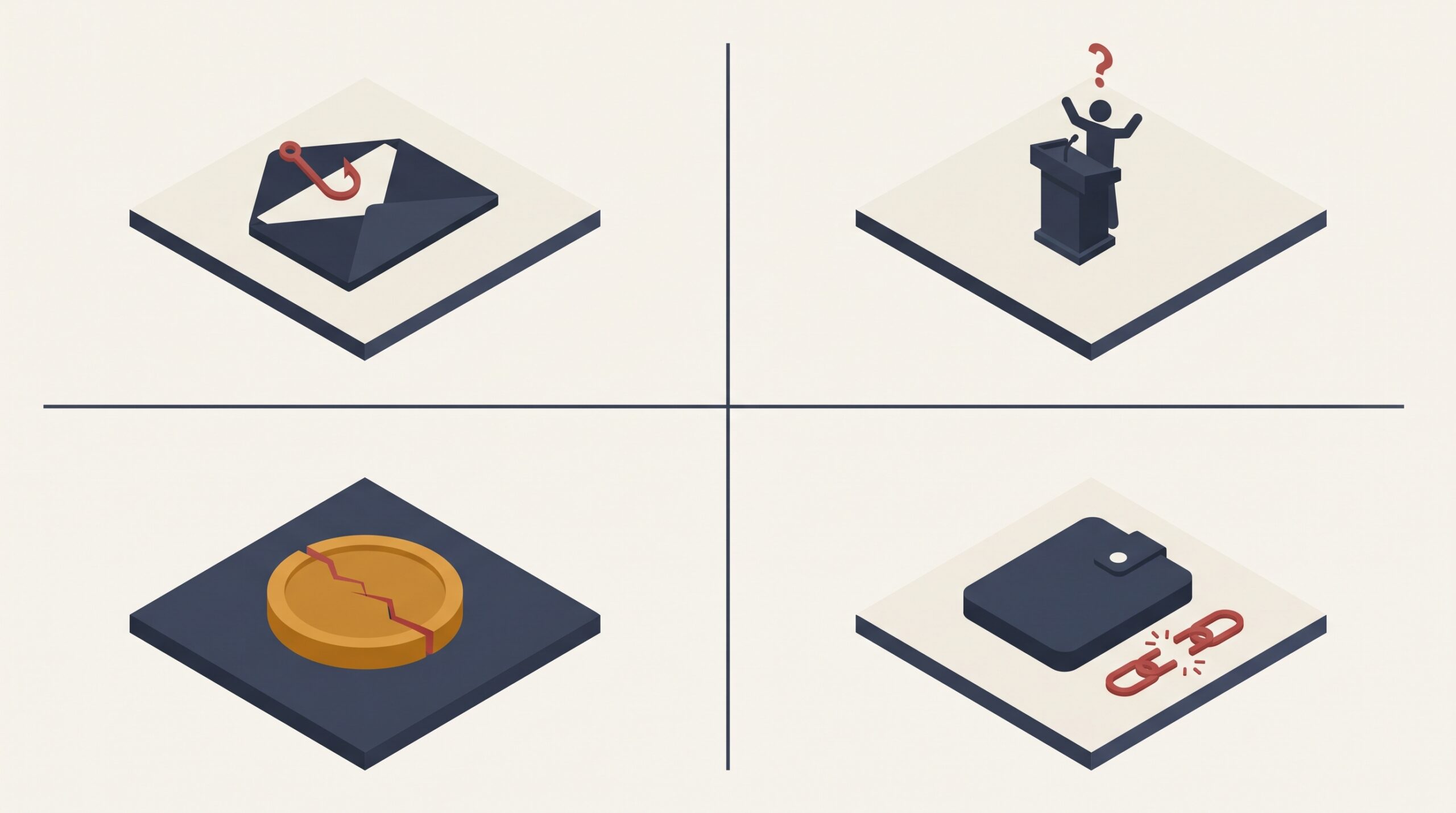
Here is the mental framework I use before buying anything that is not BTC or ETH. Run these five checks every single time:
- Is it ranked top 50 on CoinMarketCap or CoinGecko? If not, stop and think twice.
- Does the contract address match across 3 sources? Check the project official website, their official X/Twitter, and the blockchain explorer (Etherscan for Ethereum tokens). Fake copycat tokens are everywhere on DEXs.
- Is liquidity above $1M on the DEX? Low liquidity means you might not be able to sell without massive slippage.
- Is the team publicly identifiable? Anonymous teams can build great projects — but they can also rug pull and vanish with zero consequences.
- Am I hearing about this from a random Telegram group? If yes, you are likely the exit liquidity.
Also: beware of free airdrops. No real project randomly gives away valuable tokens. Any link saying connect your wallet to claim your free airdrop is a 99.9% scam. Do not chase insider tips — exchange listing rumors in group chats are almost always designed to dump overpriced bags on you.
Mistake 6: Going All-In
The scenario: Blinded by stories of overnight wealth, you dump your life savings, house down payment, or — worst of all — borrowed money into crypto. A black swan hits. Your portfolio craters. You now face a real financial crisis.
Lesson:
- Only invest what you can genuinely afford to lose — money that, if it went to zero, would not affect your rent, mortgage, kids education, or retirement.
- Crypto should be the high-risk slice of a diversified portfolio — typically 5-20% of your total investments depending on your risk tolerance.
- Build a 3-6 month emergency fund before you put a single dollar into high-risk assets.
FAQ (Frequently Asked Questions)
Do I have to buy a whole Bitcoin?
No. Bitcoin is divisible to eight decimal places. The smallest unit — 1 Satoshi — equals 0.00000001 BTC. You can buy just $10 worth. The question of how to buy Bitcoin has nothing to do with buying a whole coin.
Is it too late to buy Bitcoin now? Is Bitcoin worth buying in 2026?
Is Bitcoin worth buying? It depends on your time horizon and risk tolerance. If you believe in the long-term value of decentralized, scarce digital assets — and their adoption rate is still well under 20% globally — then DCA is a practical approach. Personally, I think we are still early in the adoption curve. But that is my opinion, not financial advice.
Can I buy 0.001 BTC?
Absolutely. Bitcoin divisibility makes it accessible at any budget. The barrier to entry for how to buy BTC is not price — it is knowledge.
What is gas fee? Why are fees sometimes so high?
What is gas fee? It is the transaction fee paid to network validators (or miners). On networks like Ethereum, when lots of people are transacting simultaneously, block space gets expensive. To save money, check network congestion first and transact during off-peak hours, or use Layer 2 solutions like Arbitrum, Base, or Optimism.
How do I handle extreme price volatility without losing my mind?
Stop obsessively checking price charts — it breeds anxiety and impulsive decisions. DCA smooths out the ride. Zoom out: look at weekly or monthly charts. Short-term volatility is a feature, not a bug.
How do I convert Bitcoin back to cash?
This is called off-ramping. On Coinbase or any major exchange: sell your BTC for USDC or USD balance, then withdraw via bank transfer. Important: selling crypto may trigger a taxable event. Keep records of every transaction.
What happens to my crypto if my exchange goes bankrupt?
If an exchange declares bankruptcy, funds held in its accounts may be frozen or lost — FTX customers are still fighting to recover their money. This is exactly why understanding how to store Bitcoin matters: if your coins are in your own cold wallet, no exchange collapse can touch them.
Is cryptocurrency legal? Do I pay taxes?
This varies by country. In the US, EU, and Japan, holding and trading major cryptocurrencies is legal. In most jurisdictions, profits from selling crypto are subject to capital gains tax. Consult a local tax professional — do not wait for an audit to figure this out.
Final Thoughts
Cryptocurrency beginner or not, the most important thing I can tell you is this: slow down. I have been in crypto since 2017, through two full boom-and-bust cycles. The trades that made me money were the ones I made calmly, with a plan. The ones that cost me money were almost always made in a state of anxiety, greed, or fear of missing out.
If you remember only three things from this entire guide:
- Only invest what you can afford to lose.
- Protect your private keys and seed phrase like your life depends on it — because in crypto, it does.
- Anyone promising guaranteed profits is lying to you.
You might regret not buying a particular coin. But one reckless, uninformed bet that blows up your savings — that is the regret that actually hurts. Give yourself time. Start small. Build your understanding. This is not just an investment — it is an education in a new financial system. Whether you make money or lose money, the knowledge you gain here will be an asset that compounds for the rest of your life.
A friend of mine runs a Telegram channel where he occasionally shares market observations and trade ideas — no hype, no 100x guaranteed nonsense, just honest analysis. If you want to follow along as you learn, you can check it out here.
About the Author: Ethan
Crypto Researcher | 7+ years in crypto investment and research
Ethan has been active in cryptocurrency since 2017, living through two complete market cycles. He personally manages a crypto portfolio that has weathered extreme volatility, and has provided market strategy consulting for a DeFi lending protocol (2022) and a cross-chain infrastructure startup (2023). His focus is making complex crypto concepts accessible to beginners — without the hype, without the jargon, and without selling courses.
References
- Crypto.com. (2025). 2025 Crypto Market Sizing Report. crypto.com
- Triple-A. (2024). Global Cryptocurrency Ownership Data 2024. triple-a.io
- The Block. (2022). FTX Collapse Timeline. theblock.co
- CoinMarketCap. (2024). Bitcoin Price and Market Cap. coinmarketcap.com
- Farside Investors. (2024-2026). Bitcoin ETF Flow Tracker. farside.co.uk
- BankInfoSecurity. (2025). Coinbase Hack Affects 70,000 Crypto Customers. bankinfosecurity.com
- CoinDesk. (2026). Ledger Data Breach Through Global-e Partner. coindesk.com
- Circle. (2024). USDC Transparency and Audits. circle.com
Disclaimer
This article is for informational and educational purposes only and does not constitute financial or investment advice. The cryptocurrency market is highly volatile. Any investment decisions should be based on your own independent research and consultation with a qualified professional. Mentions of specific exchanges or products are for illustrative purposes only and do not constitute endorsements. Please assess risks carefully.
First published January 2026. Last updated July 14, 2026. Content will be periodically refreshed to reflect significant market changes.