
Legit Free Crypto Signals Channel I Found (2026)
After testing 10+ Telegram crypto signal channels and losing money to scams, I found one free signals channel that actually passed every legit check. Here is my honest review.
I still remember the exact moment I realized I had been played.
It was 2 AM. I had just followed a “high-conviction” signal from a Telegram channel with 80,000 subscribers. The admin had posted a screenshot showing a 340% gain from the previous week. The chart looked convincing. The comments were flooded with fire emojis and “thanks admin!!” messages. I went in with more than I should have — $1,400, which at the time was about a third of everything I had in my trading account.
Seventeen minutes later, the coin dumped 62%.
I went back to the channel to check what happened — and the signal message was gone. Deleted. Like it never existed. The comments still showed fire emojis, but now I noticed something I had missed before: the accounts posting them all had the same default Telegram avatar and no message history outside that channel. Bots. Dozens of them.
I sat there staring at my screen at 2:17 AM, and I did not feel angry yet. I felt stupid. Not because I had lost a trade — I have lost plenty of trades. But because I had handed my money to a channel that was never real in the first place. I did not tell anyone about it for two weeks. I just kept going back and refreshing the chat, like the message might reappear if I scrolled hard enough.
That was the night I decided to stop guessing and start systematically testing every single free crypto signals channel I could find. I built a spreadsheet. I tracked entries. I measured slippage. I DM’d admins. I wanted to know: is there even one channel out there that is not a scam?
Turns out, there is. But finding it required learning a set of checks that most people never bother with — and the lessons came at a price. This article is everything I wish someone had handed me before I started.
📋 Table of Contents
- Why Most Telegram Signal Channels Are Not What They Seem
- How I Learned to Separate Legit Signals from Scams
- The 5 Mistakes That Cost Me Real Money
- When Signals Are Most Dangerous — The Hidden Timing Trap
- FAQ: What Most People Ask Before Joining a Signal Channel
- Final Thoughts: The Channel I Actually Kept
Why Most Telegram Signal Channels Are Not What They Seem
Let me be direct: based on my testing, roughly 19 out of every 20 Telegram signal channels are either outright scams, pump-and-dump fronts, or funnels designed to push you into an overpriced VIP subscription where the signals are somehow worse than the free ones.
This is not just my opinion. A 2025 academic study from the University of Zurich analyzed Telegram-based pump-and-dump operations and found that some of these groups exceed two million members — with organizers buying low-cap tokens, hyping them as “exclusive signals” to the group, then selling into the artificial demand they created. The members? They are not traders. They are exit liquidity. By the time you act on the signal, the price has already peaked and the insiders have cashed out.
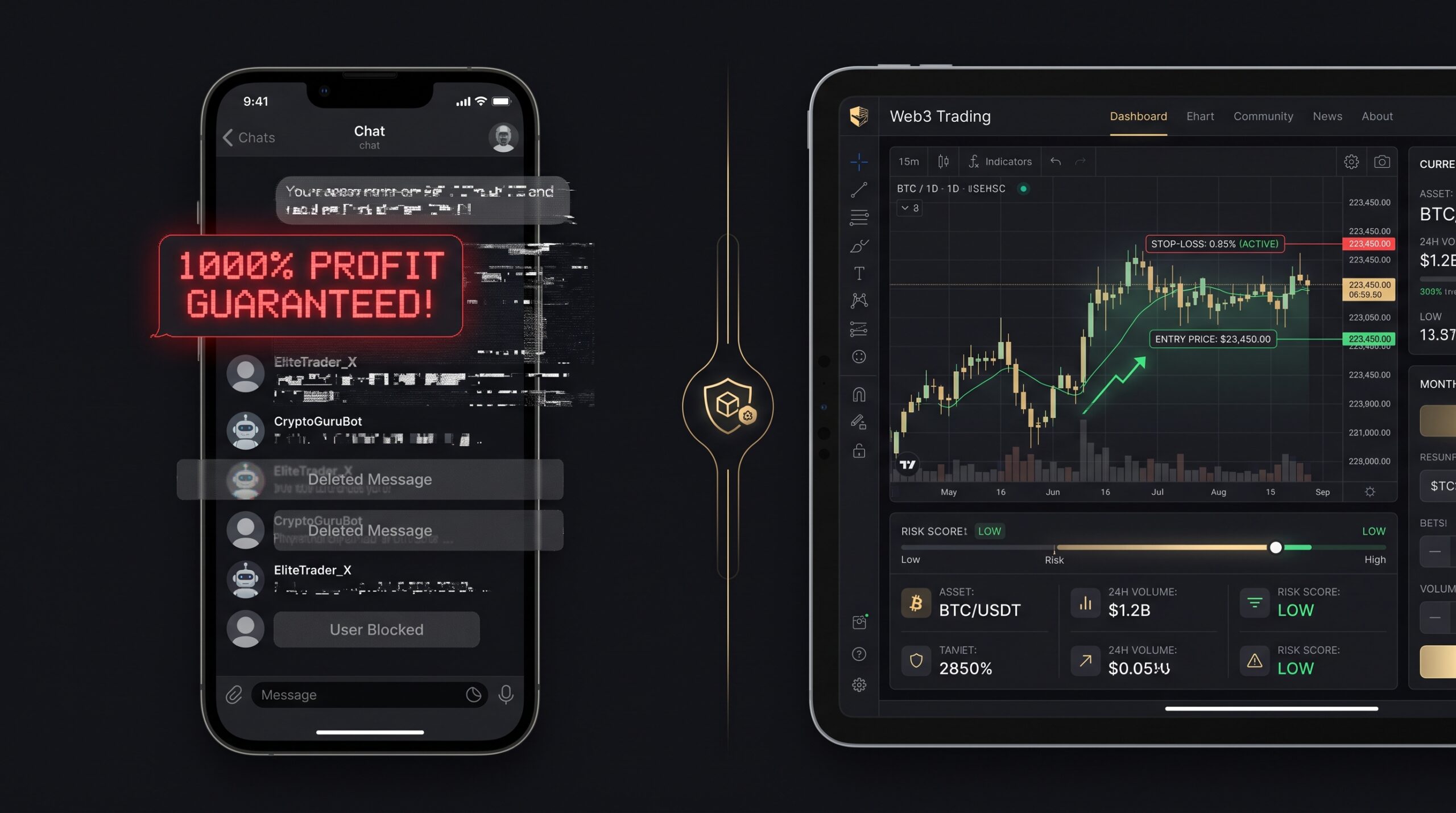
What I did not understand until I started studying these channels closely is that they do not just post bad trades — they engineer an entire psychological experience. Fake screenshots of impossible gains. Bot-generated engagement that makes the group look alive with “real” members. Admins who DM you personally with “limited spots” and countdown timers. Every element is calibrated to bypass your skepticism and trigger FOMO before your rational brain can intervene.
And here is the part that makes it genuinely hard to spot: some of these channels do post winning trades. They can afford to — because they only need you to trust them once. One big loss where you went all in wipes out every small win, and by the time you figure it out, the signal has been deleted, the narrative has moved on, and a new batch of subscribers has joined.
The free crypto signals space is the worst offender. “Free” is the bait. The actual business model is either dumping bags on free members who get the signal 30 seconds after the paid group, harvesting your personal data and wallet activity, or upselling you into a paid tier that delivers the same garbage — just with more pressure. I have seen channels that look like the best crypto signal provider on the surface — glossy branding, “verified” badges, thousands of apparent subscribers, daily “wins” with perfectly cropped green P&L screenshots — turn out to be the most carefully engineered traps I have ever encountered.
How I Learned to Separate Legit Signals from Scams
After burning through more channels than I care to admit — and losing enough money to make this article a very expensive piece of writing — I developed a five-point checklist that I now run against every single signal group before I even think about following a trade. Here it is.
1. Check the “Loss Transparency,” Not the “Win Rate”
Win rate is the most abused metric in the signal industry. A channel can post 30 signals, delete every single loser, and claim a 95% win rate — and you would never know the difference unless you were tracking them in real time. Fake trading screenshots are shockingly easy to produce — there are entire tools designed for it.
So I stopped asking “what is your win rate?” and started asking a different question: can I find a losing trade in your chat history right now?
A channel that never posts a loss is not accurate. It is curated. A legitimate channel treats stopped-out trades as part of the record. They might even post a breakdown of what went wrong — the entry was mistimed, the market structure shifted, the news event invalidated the setup. That level of transparency is worth a thousand screenshots of green P&L.
2. Track the “Slippage Gap” Yourself
This one was a game-changer for me. I opened a tiny test wallet with just enough to take micro positions, and for every signal I recorded two numbers: the entry price the channel claimed, and the entry price I actually got when I executed immediately.
On the scam channels, the gap was consistently 2–5%. By the time the signal hit the free group, the price had already moved. I was not following a signal — I was providing exit liquidity for the VIP group that received the call 30 seconds earlier. This is the single most common mechanism behind “free” signal groups, and almost nobody talks about it.
On the one legit channel I eventually kept, my actual entry was consistently within 0.5% of the posted signal. That gap tells you everything you need to know about whether the channel sees you as a client or as a bag holder.
3. DM the Admin with a Technical Question
Send the channel admin one specific question: “Is your stop-loss based on ATR multiples, or do you use structural levels?”
How they respond tells you more about the channel than any review ever could.
A real trader running a real channel will give you a real answer — maybe a paragraph, maybe a voice note, maybe a link to their educational content explaining their methodology. A scam operator will do one of three things: ignore you entirely, deflect with something generic (“our signals are the best bro”), or immediately try to sell you a VIP discount.
I have done this to eight different channels. Six never replied. One sent me a “limited time 50% off” link within 90 seconds. One actually walked me through their risk framework — explaining that they use a combination of ATR-based initial stops with structural adjustments after the first take-profit hit. Guess which one I still use.
4. Search the Channel Name on Reddit and Twitter
If a Telegram signal channel has real users, someone somewhere has talked about it — and not all of what they said will be positive, which is exactly what you want to see.
Type “[channel name] + scam” and “[channel name] + review” into Reddit and Twitter/X. This is especially important when you are searching for crypto signals Telegram channels specifically — it is the most saturated category, and also the one with the most sophisticated impersonation schemes. I have found channels where the “official” account had six identical copycats, each with slightly different usernames and the same stolen content.
A total absence of third-party discussion is not a green flag. It means the channel is either brand new (and unproven) or has too few real users for anyone to care. What you want is mixed, messy discussion: someone saying the BTC signals were solid, someone else complaining about a bad altcoin call from three months ago. That is normal. That is what a real user base looks like.
5. Demand a Free Trial — and Actually Test It
Any signal provider that will not let you test their service before paying is hiding something. Period. A legitimate operation will offer a trial, a free tier, or at minimum a redeem-code-based test period. They are confident enough in their product to let you verify it yourself.
But here is where most people fail — and I failed too, the first few times: you actually have to test the trial. Do not just join the channel and scroll through the chat feeling optimistic. Paper trade 15 to 20 signals. Log every entry, every exit, every outcome in a spreadsheet. Calculate your own win rate, your own average risk-reward ratio, and — critically — your own slippage numbers. I use a simple Google Sheet with columns for date, coin, posted entry, my actual fill, stop-loss, take-profit, result, and notes.
Only when you have 20 rows of your own data do you have information worth trusting. Everything before that is marketing.
The 5 Mistakes That Cost Me Real Money
These are not hypotheticals. Every single one of them happened to me. Some of them I repeated more than once before the lesson stuck. I am writing them down so you do not have to pay the same tuition.
Mistake #1: Trusting a Win Rate Without Verifying It
The feeling: That slow, sinking confusion when you scroll up in the chat and notice the timestamps do not line up — there are gaps, jumps, conversations that do not connect. It dawns on you gradually, and then all at once: the “90% win rate” was not a statistic. It was a curation. Cherry-picked screenshots and deleted losses arranged to look like a track record.
I remember the exact channel. I had followed five signals from them over two weeks. Three were losers, one broke even, one won small — net negative. But when I scrolled through their public feed, there were only winning trades. The losers had been removed so cleanly that if I had not kept my own log, I would have thought I was imagining things. I felt like an idiot for not tracking from day one.
The fix: From that point on, I never trusted a stated win rate again. I built a simple spreadsheet — date, coin, claimed entry, my actual entry, exit, result. After 20 signals tracked independently, the numbers do not lie. The channel that presented itself as a 90% winner? Its actual win rate, measured by my entries, was around 45%. The channel I ended up keeping? A boring, honest 60–65% — with proper stop-losses that kept the losses small and wins that actually covered them.
Mistake #2: Going Too Big on a Single Signal
The feeling: FOMO takes over. You see a “high-conviction” call. The chart is pumping. The chat is exploding with rocket emojis. Your hand moves toward the buy button before your brain finishes processing what you are doing. You size up — way up — because this one “feels different” from the other signals. This one is the one.
Then the trade reverses. Your stop-loss triggers — a normal 2% stop — but you sized so large that it just wiped out 15% of your account. You stare at the P&L number. It is not the stop-loss that caused the damage. It was your position size. The anger is not at the channel. It is at yourself, because you knew better. You sized emotionally and the market did not care.
The fix: No single trade should risk more than 1–3% of your total capital. A legitimate signal provider will tell you this — explicitly, in their educational content, not buried in a disclaimer. If a channel never mentions position sizing or risk per trade, they are not teaching you to trade. They are encouraging you to gamble. I now size every trade at exactly 1% risk, regardless of how “convincing” the signal looks or how loud the chat gets. It is boring. It is mechanical. It works.
Mistake #3: Trading Real Money on Day One
The feeling: You join a new channel and immediately feel the pressure to act — “the next signal could be the big one.” So you skip the observation period, take the first signal that looks decent, and lose. Only later, after tracking for a couple of weeks, do you notice the pattern: the signals were consistently posted at the same time each day, right when the Asian session overlap created the lowest liquidity window, making it cheap for insiders to pump small-cap coins before the free group could act.
The fix: Lurk for at least one to two weeks before risking a single dollar. During that time, paper trade every signal. Note the timing patterns — when are signals posted, and what does the liquidity look like at that hour? Track the average risk-reward ratio. Count how often stop-losses get hit versus take-profits. Count how often the take-profit is hit on TP1 only versus full targets. The goal is not to catch the next trade — it is to build a statistical portrait of whether this channel deserves your money. If you cannot wait two weeks, you are trading emotionally, and that is a bigger problem than any bad signal.

Mistake #4: Getting Emotionally Attached to One Channel
The feeling: You find a channel that gave you three good trades in a row. Suddenly the admin feels like a friend. You stop questioning the signals. You ignore the red flags — the odd timing, the deleted messages you rationalize away, the pushy DM about a “limited VIP discount” that you almost defend — because you do not want to believe you have been fooled again. Admitting you got scammed once is hard. Admitting it again, after you “knew what to look for,” is humiliating.
This one hurt the most because it was not a technical mistake. It was a psychological one. I trusted a person, not a track record. When the rug came, it felt personal in a way a bad trade never does. I did not lose a trade. I lost trust — in the channel, and for a while, in my own judgment.
The fix: Cross-reference across at least two to three channels simultaneously. If Channel A calls long on BTC with a conviction level of 8/10 while Channel B has a bearish setup on the same timeframe, you are forced to think critically rather than blindly follow. Never let one channel become your sole source of truth. The best trading signals are one input among several — your own chart analysis, broader market context, and risk parameters should all carry more weight than any single signal.
Mistake #5: Assuming “Paid” Means “Better”
The feeling: You rationalize it — “If they are charging $200 to $500 a month, they must be professional. Real money means real results.” You pay. The signals are identical to the free ones you were already getting. In one case I tested, the paid signals were actually worse — the free channel got basic setups, and the “VIP” channel got riskier, higher-leverage plays designed to produce occasional big wins that kept subscribers hooked between losses.
Now you are down the subscription fee and the trading losses, and the refund policy is nonexistent because, of course, you paid in crypto.
The fix: Price has zero correlation with quality in the signal world. Some of the most expensive VIP groups are the most sophisticated scams — the high price tag is part of the illusion. It creates perceived exclusivity and competence where neither exists. Always, always test a free trial first. Demand to see a full, unedited trade log — wins and losses, in sequence, with timestamps. If a provider will not let you verify their quality before paying, the quality is not there to verify. The money you save by not paying for garbage subscriptions is, honestly, one of the best returns you will get in this space.
When Signals Are Most Dangerous — The Hidden Timing Trap
There is one edge case that almost nobody talks about, and it is the reason I lost money on signals that would have been fine at a different hour.
Signal quality is not constant across the day. It varies dramatically with liquidity, and liquidity varies with session overlap. The most dangerous time to follow a signal — especially for altcoins and low-cap tokens — is during the late Asian session and the early European pre-market, roughly 10 PM to 3 AM EST, when order books are thin and a relatively small amount of capital can move prices sharply.
This is also, not coincidentally, exactly when a lot of scam channels post their “high-conviction” altcoin calls. It is cheaper to pump a $500K market cap token at 2 AM when the order book is 80% thinner than it is at 10 AM during the London-New York overlap. The chart looks explosive on the 5-minute timeframe. The screenshots are spectacular. But the fill you actually get — if you are not in the insider group that bought 10 minutes earlier — is the top of someone else’s exit.
I learned this the hard way and now follow a simple rule: I do not act on any signal for a coin under $50 million market cap during low-liquidity windows. I will paper trade it, add it to the spreadsheet, track what happens — but real money waits for real volume. A legitimate signal provider will have no problem with this. A scam channel will tell you you are “missing the move.”
FAQ: What Most People Ask Before Joining a Signal Channel
Are free Telegram crypto signals actually legit?
Most are not. Based on my testing and the broader consensus from Reddit trading communities, roughly 95% of free signal channels are either outright scams, pump-and-dump fronts, or lead magnets for paid tiers that deliver worse results. TradeBrains put it bluntly: the vast majority exist to extract value from you, not deliver it to you. However — and this is the reason I wrote this article — a small number of legitimate providers do exist. They offer free signals because they are confident enough in their track record to let you verify it yourself. The difference between the 95% and the 5% comes down entirely to whether you apply the verification framework I laid out above.
How do I know if a Telegram signal channel is a scam?
Five non-negotiable red flags. If you see two or more, leave immediately: (1) they delete losing trades from the chat history, (2) they promise “guaranteed” profits or “90%+ win rates,” (3) the admin DMs you first with exclusive offers — a tactic NordPass confirms is among the most common Telegram social engineering patterns, (4) they accept crypto-only payments with no free trial, and (5) their signals come without stop-losses or any technical reasoning — just a coin name, an entry, and “buy now.” A signal without a stop-loss is not a trade setup. It is a gamble, and the house is the one posting it.
What is a signal bot on Telegram and how is it different from a channel?
A signal bot automates trade alerts and typically logs every trade in an uneditable history — either on-chain or in a format that cannot be selectively deleted. Unlike a manual channel where admins can remove messages with two taps, a properly configured bot creates a permanent, tamper-resistant record that anyone can audit. This matters enormously because it removes the single most common scam tactic: selectively hiding losses while keeping the wins visible. When I evaluate a signal provider, I strongly prefer bot-delivered signals over manual channel posts for exactly this reason. A channel admin can curate. A bot cannot.
How do I verify a signal channel’s claimed win rate?
Do not trust screenshots — they are trivially fakeable. Paper trade a minimum of 15 to 20 signals, recording your actual achievable entry price — not the one the channel posted, because by the time you see it, the price may have already moved. Track every outcome, including breakeven trades and “almost hit TP1 then reversed” scenarios. A win rate above 80% is almost always fabricated in the crypto signal space. A realistic, honest provider runs somewhere in the 55–70% range, with proper risk management that keeps individual losses capped and lets the wins compound. Also search the channel name on Reddit; real users document failed calls that channels try to erase. No third-party discussion at all = nobody is actually using it.
Can I make money with free crypto signals or do I need to pay?
Yes, you can — but only if you treat signals as one input among many, never as a replacement for your own analysis and judgment. Use signals to surface trade ideas you might have missed, to confirm or challenge your own bias, or to study technical setups from traders who are more experienced than you. The moment you start blindly copying trades, you stop being a trader and start becoming someone else’s exit strategy. Free signals from a verified legit provider can absolutely be profitable — with disciplined risk management, proper position sizing, and the awareness that no single signal should ever make or break your account. The “verified legit” part is the bottleneck. And that is what this entire article is about.
Final Thoughts: The Channel I Actually Kept
Everything in this article — the five verification checks, the five expensive mistakes, the hidden timing trap — came from a genuine, slightly obsessive determination to stop getting burned and start finding something real. I did not want “guaranteed 100x” garbage. I did not want screenshots of Lamborghinis. I wanted a transparent, verifiable, bot-delivered signal source that treated me like a trader rather than exit liquidity.
After applying every test I have described — the slippage tracking, the admin DM, the paper trading over 20+ signals, the cross-referencing, the late-night spreadsheet sessions — I landed on one channel that passed. I still have the spreadsheet. I still update it every Sunday. The numbers hold.
I am not going to write a sales pitch here because that would undermine the entire point of this article. The premise from line one has been: do not take anyone’s word for anything. Verify it yourself. I gave you the framework. The only thing I am giving you now is a zero-risk way to apply it.
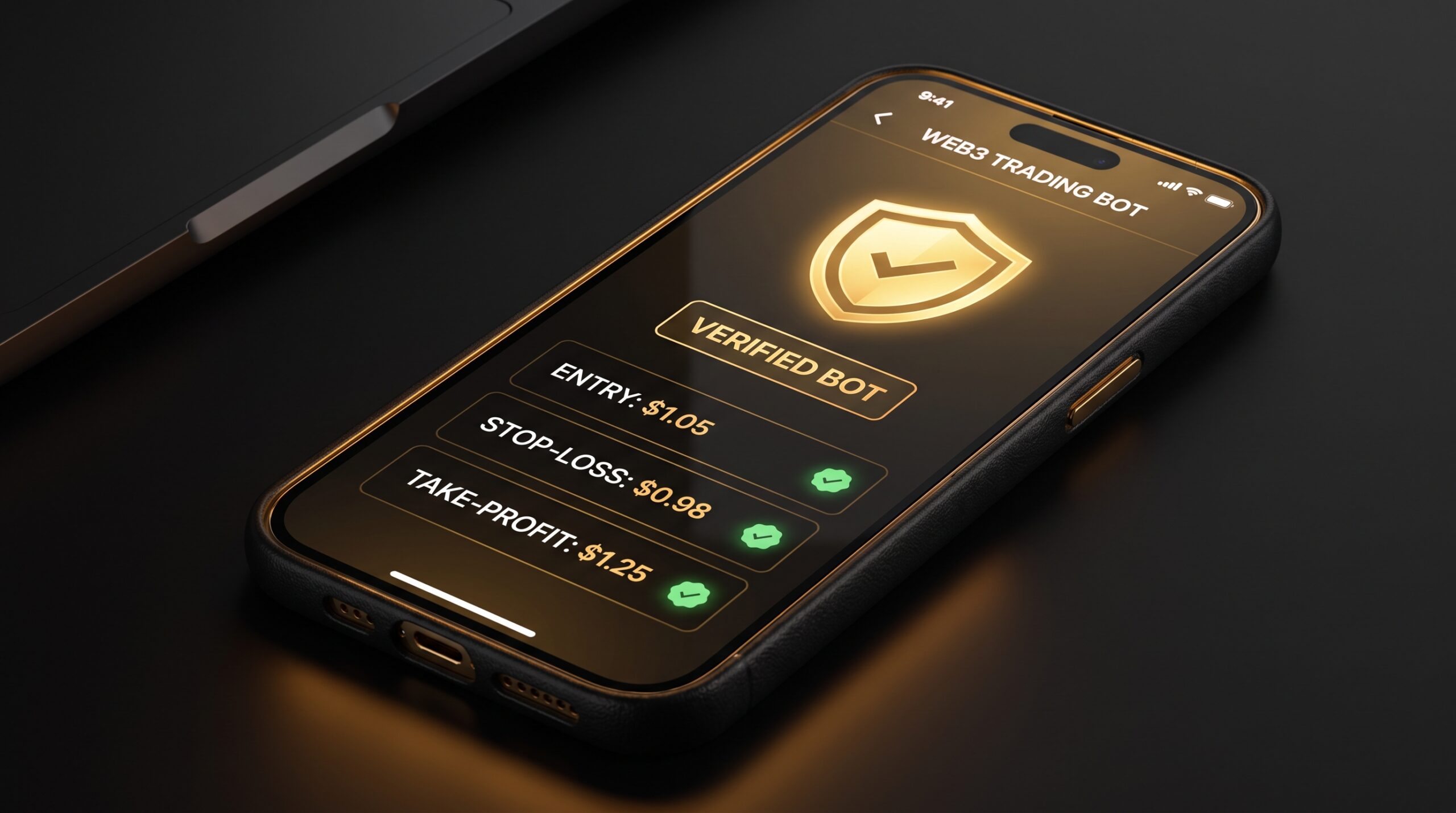
The channel I use delivers signals through a Telegram bot — every trade logged, visible, uneditable. Entries, stop-losses, take-profits, and technical reasoning included with every signal. I tracked 20+ signals on paper before going live with real money. Then I tracked another 30 after going live. The data is consistent.
If you want to run the same tests I ran, you do not need to pay anything upfront. Use the code ACST134 with the bot @ACSSIGNALBOT on Telegram. It gives you a 24-hour free membership — no credit card, no wallet connection, no commitment of any kind. Paper trade the signals. Log the entries. Verify the fills. Check whether the losing trades stay in history or disappear. DM the admin with a technical question. Apply every single check from this article.
If the channel does not meet the standards I laid out — if the slippage is off, if the history looks curated, if the admin dodges — walk away. That is genuinely the point. The best outcome this article can produce is not you joining any specific channel. It is you walking away from the next scam before it takes your money.
The spreadsheet is free. The framework is free. The code is free. Take all three, run the tests, and decide for yourself. That is the only recommendation that matters.