Crypto THE END: Why the Fear and Greed Index at Extreme Fear Is Exactly When I DCA
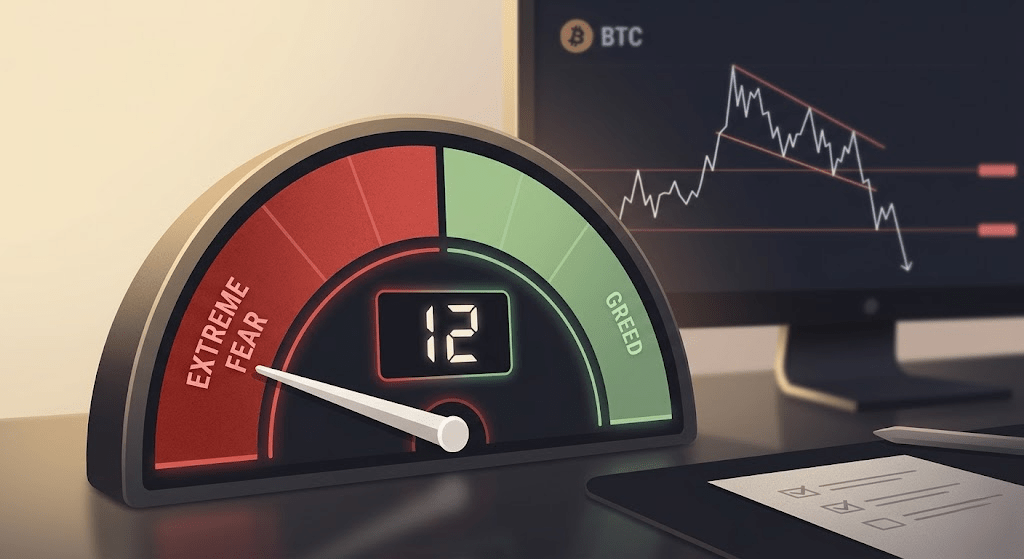
There’s a specific kind of silence that settles over crypto when the market has been bleeding for months. Not the sharp panic of a single-day crash — that’s loud, chaotic, almost energizing. This is different. This is the slow, grinding exhaustion where every bounce gets faded, every headline sounds like a verdict, and the Fear and Greed Index is pinned somewhere between 11 and 12 in Extreme Fear.
I’ve seen Reddit threads this week where people are writing things like “I feel depressed and with zero hope” and “I had cried myself to sleep for ten straight nights” after watching their portfolios evaporate. Not from leverage blowups. Just from being fully deployed, watching month after month of red candles, and feeling the walls close in. One trader described selling for a loss, then watching the same token do +40% literally an hour later: “I’m feeling disappointed in myself.”
If that lands close to home, I want you to know something. That feeling — the one that makes you want to close the app and never open it again — is not a sign that you’re bad at this. It’s the emotional texture of capitulation. And across every cycle I’ve been through, capitulation has been more of a signal than a warning.
I’m going to lay out exactly what I’m doing right now. Not a generic “buy the dip” post. I’ll give you the framework, the buy zones, the logic, and the one hard lesson from a past cycle that made me raise cash at 81K this time around.
Table of Contents
- What the Fear and Greed Index Actually Tells You
- I Raised Cash at 81K. Here’s Why.
- My DCA Framework: The Exact Buy Zones
- Why I Think the Cycle Low Comes Earlier Than the Crowd Expects
- Noise vs. Structure: The Stories That Don’t Matter
- Three Mistakes I’ve Made (And Seen Others Make Every Cycle)
- FAQ: Straight Answers to What You’re Actually Asking
- Final Thoughts: This Is the Part Where Frameworks Earn Their Keep
What the Fear and Greed Index Actually Tells You
The Crypto Fear and Greed Index, published daily by Alternative.me, aggregates six weighted factors into a single number from 0 to 100: volatility (25%), market momentum and volume (25%), social media sentiment (15%), survey data (15%, currently paused), Bitcoin dominance (10%), and Google Trends data (10%).
Here is what I’ve learned about this index after years of checking it: it is not a price predictor. It will not tell you where the bottom is. What it tells you is how the collective market feels — specifically, whether the dominant emotion is fear or greed. And that, by itself, is a powerful piece of information.
When the needle hits Extreme Fear — right now it’s at 12 — it means sellers are exhausted, buyers are too scared to step in, and the market is pricing in catastrophe as the base case. That vacuum is exactly where reversals tend to begin. Not because the index magically calls a bottom. Because capitulation clears the supply, and the people who are left are too frozen to sell further.
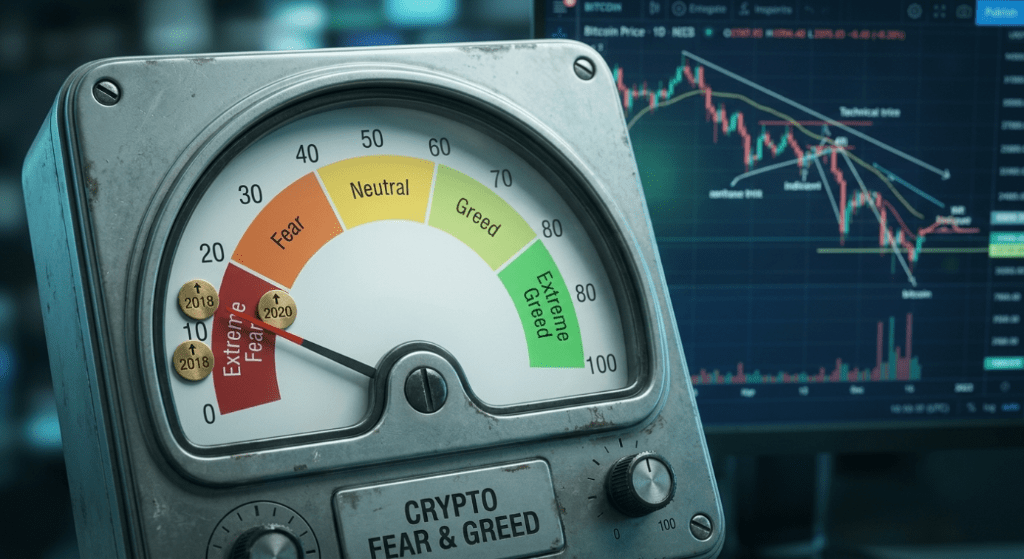
There is actual backtest data behind this intuition. A Reddit user called skogsraw ran a comparison between vanilla weekly DCA into Bitcoin and a tiered DCA keyed to the Fear and Greed Index, covering March 2018 through September 2023 — two full bear markets and a bull run:
| Strategy | ROI |
|---|---|
| Vanilla DCA ($100/week) | 124.8% |
| Tiered DCA only (buy more at fear, less at greed) | 140.1% |
| Tiered DCA + sell 5% weekly at Extreme Greed | 184.2% |
The index is not a crystal ball. It is a compass. Right now, the compass is pointing to a place where buyers have historically won — not by a little, but by nearly 60 percentage points over doing nothing differently.
I Raised Cash at 81K. Here’s Why.
Earlier this cycle, when Bitcoin bounced into the 81,000 to 84,200 range, I told heavily exposed and inexperienced holders to consider reducing some exposure and raising cash.
I knew there was a chance the market would keep running and I’d look wrong. That’s always the risk when you raise cash during a bounce. But I wasn’t trying to call a top. I was trying to make sure I had options.
I learned this the hard way in a previous cycle. I won’t go into the exact numbers, but I’ll say this: there was a moment, years ago, where I was fully deployed into a correction, fully convinced I was holding quality, and fully wrong about how much further the drawdown could go. I didn’t sell. But I couldn’t buy either. I had to sit there, frozen, watching levels I would have loved to buy at print one after another — with absolutely zero ammunition.
That experience rewired how I think about cash. In crypto, being right about the direction doesn’t help you if you’re out of bullets. Cash is not a bet against the market. It’s a bet that you’ll want the ability to act later.
So I raised cash at 81K. And that cash is the reason I’m calm right now — because when everyone else is frozen or fleeing, I can actually do something.
My DCA Framework: The Exact Buy Zones
So where am I buying? I’ll give you the levels.
What the structure is telling me. Bitcoin has broken below a bear-flag pattern, which in my view raises the probability of a deeper drop rather than a straight move to new highs. If price stays above the previous local low around 65,700 to 65,800, you can still interpret the broader structure as a higher low within an uptrend from the late-February bottom. That’s a description, not a guarantee.
In my assessment, the chance of breaking below that zone is relatively high — because the support at 65.7K is not especially strong. If we lose it, the structure forms a lower low. The prior bullish narrative weakens.
That’s not a reason to panic. That’s a reason to have a shopping list.
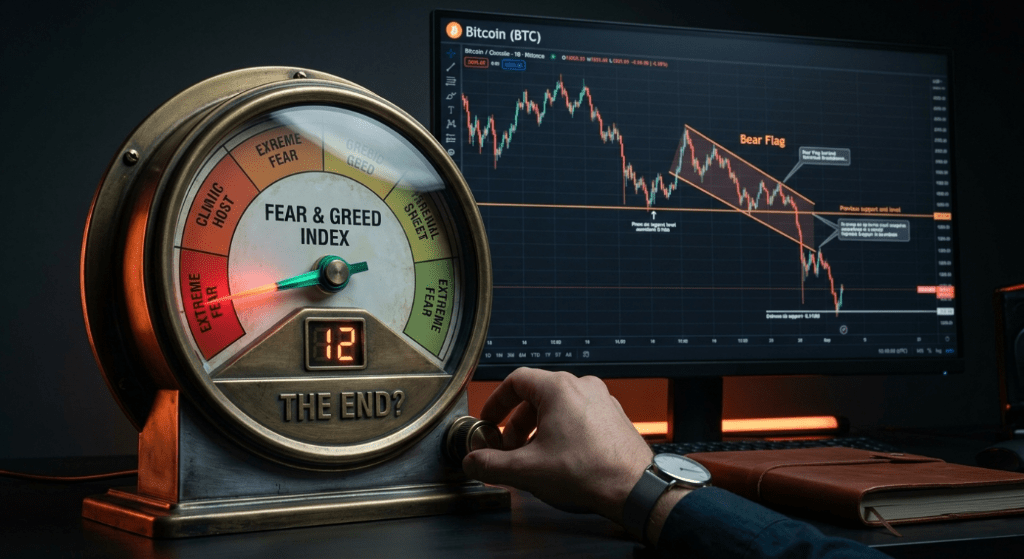
Zone 1: 60,200 – 60,500. Slightly above the prior major February low just above 60,000. I place orders slightly above the exact low because markets often reverse before touching the precise prior bottom — that’s where the bids cluster and where the most eager buyers step in. First meaningful allocation goes here.
Zone 2: 50,000 – 60,000. Layered limit orders every 1,000 to 2,000 dollars across this band. The densest batch sits in the lower portion — this is the bear-flag downside target zone, and in my view the area where risk-reward tilts most decisively toward accumulation.
The 200-week moving average currently sits around 61,700 and is rising toward roughly 62,000. Historically, this level has acted as a gravity well for Bitcoin during deep corrections. I treat it as confirmation, not a precise entry — if price is hovering near the 200-week MA and the Fear and Greed Index is still in Extreme Fear, I’m buying with conviction.
I’ve already started small DCA buys near 70,000 on Bitcoin, around 2,000 on Ethereum, and in the 0.22-0.25 range on select alts. These are starter positions. The heavier capital waits at the levels above.
The framework isn’t about catching the exact bottom. It’s about ensuring that when the market is screaming THE END, I’m methodically buying — not frozen, not fleeing.
Why I Think the Cycle Low Comes Earlier Than the Crowd Expects
Most market participants are pointing to October as the likely cycle low, based on the four-year cycle framework. It’s a clean narrative: halving happens, 12-18 months later the peak, then a correction, then the low aligns with historical seasonality.
I disagree with this consensus. And I want to be clear about why — because it directly affects your buying timeline.
Bitcoin has been front-running expectations all cycle. It reached a new all-time high before the halving for the first time in its history. That was unprecedented, and it should force anyone anchored to the standard four-year playbook to ask: what else might arrive earlier than expected?
My preferred timing window for the cycle low is summer — roughly June through the end of August. Not because I’m certain. Because if the market is front-running the bullish events, it may also front-run the bearish resolution.
The practical implication is straightforward: if you’re waiting until October to start buying because that’s what the consensus timeline says, you might miss the window entirely. The market doesn’t distribute bottoms according to a calendar. It distributes them when maximum pain has been inflicted and maximum participants have given up. If that happens in July instead of October, the people still sitting in stables waiting for the “right” month will be the ones chasing.
I’m not asking you to agree with me. I’m asking you to have a timeline opinion of your own, rather than borrowing the crowd’s.
Noise vs. Structure: The Stories That Don’t Matter
Every time the market drops, stories appear to explain why. Right now, the stories are:
Mt. Gox moved 10,000+ BTC to new wallets. This fear returns every single cycle. Is it relevant? Possibly, in the sense that those coins may eventually enter the market. But treating a wallet transfer as the cause of a broad market correction is lazy. Mt. Gox fear is recycled panic. It was here in 2018, in 2022, and it’s here now. The market survived every time.
Strategy sold 32 BTC for about $2.5 million — its first BTC sale since 2022. The company holds thousands of Bitcoin. Thirty-two coins is a rounding error. Selling a tiny amount can actually help demonstrate BTC liquidity for accounting purposes, and Strategy had already signaled the possibility of future sales. They sold in 2022, too. Then they bought more. This is not a bearish strategic shift.
Miners like HIVE reduced their Bitcoin holdings materially this quarter. I don’t see this as bearish. It’s smarter cash-flow management after miners learned hard lessons in previous cycles. Holding more fiat during weak periods improves survival odds and operational flexibility. The miners who held zero cash in 2022 didn’t survive. The miners holding cash now are adapting, not capitulating.
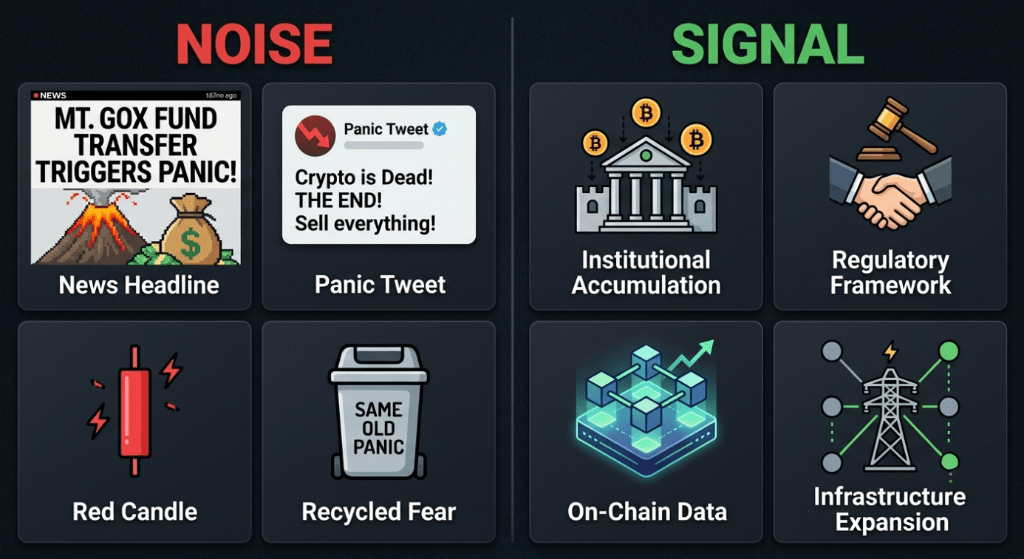
Here’s what I’m actually paying attention to: Capitol B seeking to raise roughly 5 billion euros (about $5.8 billion) to buy more Bitcoin. Robinhood completing its acquisition of WonderFi for $180 million to expand its crypto presence in Canada, giving it meaningful exposure to Bitbuy and Coinsquare — the Canadian crypto market.
These don’t reverse the price tomorrow. But they tell you where institutional capital is flowing while retail is panicking. And that is the structure underneath the noise.
My rule is simple: if a headline won’t matter in six months, it’s noise. A regulatory shift by the U.S. government toward crypto? That matters. A Fortune 500 company putting Bitcoin on its balance sheet? That matters. An exchange wallet moving coins that have been moving every cycle since 2014? That’s noise. The Mt. Gox narrative will be recycled again in 2028. The institutional infrastructure being built right now won’t be.
Three Mistakes I’ve Made (And Seen Others Make Every Cycle)
Mistake 1: Letting Noise Trigger Real Decisions
I’ve watched people sell entire positions because of a single wallet transfer headline. Six months later, the market is higher, the headline is forgotten, and the seller is still out of position — waiting for a pullback that never comes to the level they sold at.
What I do now: the six-month test. Will this headline be discussed in six months? If the answer is no, it doesn’t get a vote in my portfolio decisions. Period.
Mistake 2: Going All-In on the First Convincing Dip
I mentioned the earlier cycle scar where I was fully deployed with no cash. Here’s the specific mistake inside that mistake: I was so certain the correction was “enough” that I used everything. When the market decided it wasn’t enough — when it found another 30% lower — I had nothing left to deploy.
The psychology of “this is definitely the bottom” is seductive because it feels like conviction. But conviction without cash reserves is just gambling with extra vocabulary.
Now I never deploy more than a pre-planned percentage at any single zone. If the market bounces before hitting the lower zones? I still have powder for the next opportunity. If it keeps falling? I keep buying at better prices. Either path, I’m not trapped.
Mistake 3: Borrowing the Crowd’s Timeline
There is comfort in believing what everyone else believes. If the consensus says October is the low, and you buy in October, and it doesn’t work out — at least you weren’t alone in being wrong.
But the market doesn’t care about your social comfort. Bitcoin front-ran the halving with an all-time high. In my view, it may also front-run the cycle low. My job isn’t to be in the consensus. It’s to have a framework and execute it — even if the timing isn’t tidy.
FAQ: Straight Answers to What You’re Actually Asking
Is the Fear and Greed Index reliable?
It’s reliable as a measure of sentiment. It is not reliable as a timing tool. Extreme Fear has historically coincided with good buying zones, but it doesn’t tell you when the reversal happens — only that the emotional conditions for one are present. Pair it with a technical framework and a capital allocation plan, not a market order.
How do I tell the difference between market noise and real news?
Ask: will this headline be discussed six months from now? If no, it’s noise. Also watch what the market does after the headline, not during it. Bearish news + price holds = someone is accumulating. Bullish news + price fades = someone is distributing. The reaction tells you more than the event.
How do I stop myself from panic selling?
Two rules. One: never sell into a crash. If you’re going to reduce exposure, do it during a bounce into resistance — not during the selloff. Two: write down your exit conditions when the market is calm. When the panic hits, follow the checklist. Don’t make decisions from inside the red candle.
Should I wait until October to buy?
My honest view: I think the cycle low arrives earlier than the October consensus — my window is summer, June through August. But regardless of who’s right about timing, the better approach is to spread your entries across zones rather than waiting for a single date. If you wait for the “right” month and it doesn’t come, you’re sitting on your hands while the market leaves without you.
Final Thoughts: This Is the Part Where Frameworks Earn Their Keep
Right now, the Fear and Greed Index is at 12. Bitcoin has broken below a bear flag. Every headline is some version of THE END. The consensus says wait until October. Most people are either frozen, fleeing, or too exhausted to care.
This is exactly the environment where having a framework — not a hunch, not a coin pick, not a Twitter call — separates the investors who survive from the ones who become someone else’s exit liquidity.
I don’t know whether BTC holds 65,700 or breaks to 60,000 or even 50,000. What I know is: I have cash I raised at 81K. I’ve started small DCA buys. I have heavier allocations mapped at 60.2K and across the 50-60K zone. And I’m watching the 200-week moving average like a hawk.
The market will test your conviction. It always does. Having a plan — specific zones, specific allocations, a clear distinction between noise and structure — is what replaces the sick feeling in your stomach with something closer to focus. Not certainty. Just clarity about what you’ll do next.
If 65,700 breaks this week, I’m watching how price behaves at the 200-week. If it holds and we start forming a base, the higher-low thesis is still alive. Either way, I have a plan for it. That’s the point.
If you found this useful, bookmark the site or subscribe — I put out analysis weekly, same format, same framework. No hype. No coin picks. Just the levels, the logic, and what I’m doing with my own capital.
Ready to Take the First Step?
Join our community for daily market news. Curious about our strategy? Preview 8-15 daily short-term trade setups in the Signals channel — new users who join via the "Trade Signals" button automatically receive a $59/month pass. Prefer a personal conversation? Contact us anytime.